
A Typical South African Breakfast
4 min read
Quick Overview
- Prep time
- 15 minutes
- Cook time
- 25 minutes
- Total time
- 40 minutes
- Servings
- 4
- Difficulty
- Easy
- Cuisine
- South African
Breakfast in South Africa doesn't follow one script. A city commuter might grab a rusk and a flask of coffee, while a family on a farm sits down to a full plate of boerewors, eggs, and maize porridge before heading out to work. Both are authentically South African, and understanding the range tells you a lot about the country's food culture.
The Farm-Style Breakfast
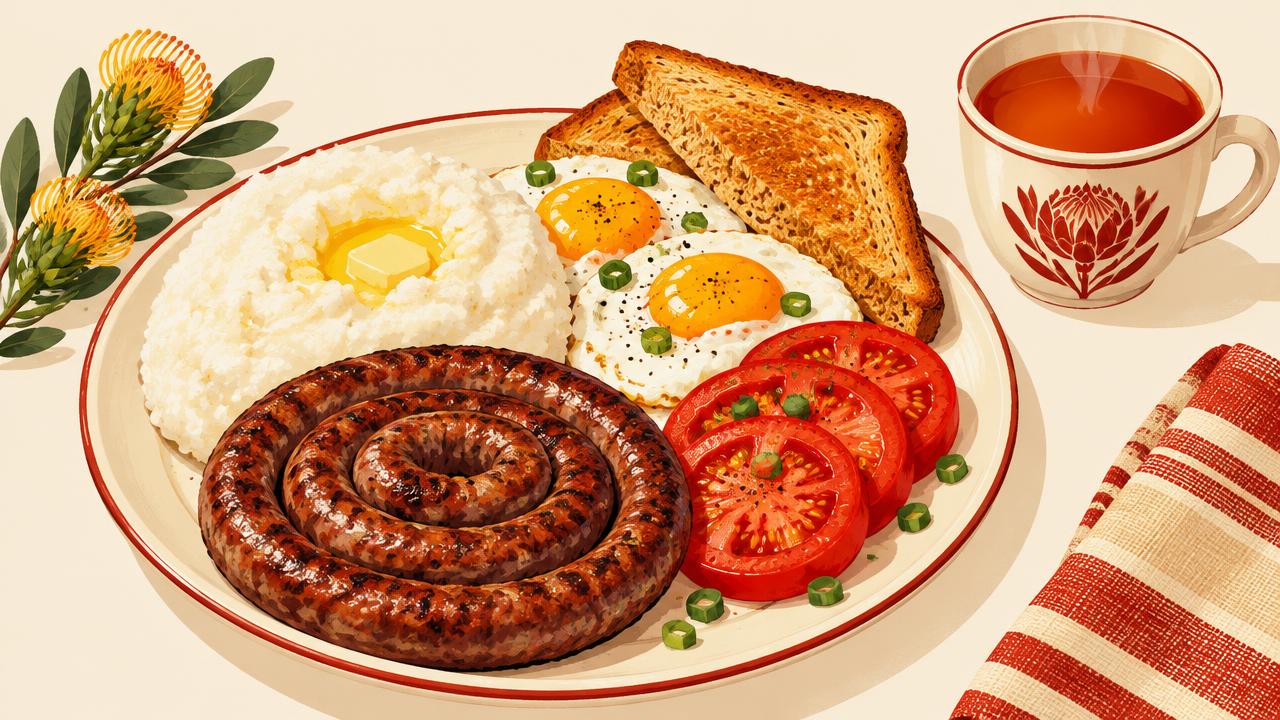
The version most visitors picture when they hear "South African breakfast" is the hearty farm spread: coiled boerewors sausage, fried or scrambled eggs, a tomato-onion relish, and a mound of maize porridge called pap. This meal grew out of an agricultural lifestyle where breakfast needed to carry someone through hours of physical work, and it still shows up at guesthouses, braai mornings, and family gatherings across the country.
Chef's Notes / Key Takeaways
- ▸A classic South African farm breakfast centers on boerewors, eggs, and pap, often with a tomato-onion relish called sheba or smoor.
- ▸Pap (mieliepap) is a maize porridge similar to grits or polenta, ranging from soft and creamy to firm and sliceable.
- ▸Rusks (beskuit) — twice-baked, dried buttermilk biscuits — are a common lighter breakfast, dunked in coffee or rooibos tea.
- ▸Boerewors is a coiled, spiced beef-and-pork sausage seasoned with coriander, nutmeg, and cloves, distinct from British-style bangers.
- ▸Regional and cultural variations exist, including amasi (fermented milk) with maize meal in many Black South African households.
- ▸The meal reflects South Africa's farming and braai (barbecue) culture, where hearty, protein-rich food supports outdoor labor.
Boerewors deserves special attention here. Unlike a standard breakfast link, boerewors is a coarsely ground beef-and-pork sausage, traditionally coiled and grilled or pan-fried, seasoned with a distinctive blend of toasted coriander seed, black pepper, nutmeg, and cloves. Regulations in South Africa actually require boerewors to contain at least 90% meat, which keeps it noticeably meatier and less filler-heavy than many mass-produced sausages elsewhere.
Pap: The Porridge at the Center
Pap, also called mieliepap, is a maize meal porridge closely related to grits or polenta. For breakfast, it's usually made soft and slightly loose, similar to a creamy grits consistency, though the same maize meal can be cooked firmer for lunch or dinner and sliced or shaped for grilling. Stirring in a bit of butter and salt at the end rounds out the flavor, and pap is often served alongside a tomato-based relish known as smoor or sheba, which adds acidity and moisture to balance the richness of the sausage and eggs.
"Pap and boerewors isn't just a meal, it's what gets a farm going before sunrise." — a common description of the dish among South African home cooks.
Lighter Options: Rusks and Coffee
Not every South African morning includes a full cooked plate. Rusks, known locally as beskuit, are twice-baked buttermilk biscuits, dried until hard and crumbly, designed specifically for dunking into hot coffee or rooibos tea until they soften. They're a practical, make-ahead breakfast that keeps for weeks in an airtight tin, and they're common in households where mornings move fast.
Rooibos tea itself deserves a mention — it's a naturally caffeine-free red tea grown almost exclusively in South Africa's Western Cape, and it appears on breakfast tables as often as coffee does.
Cultural and Regional Variations
South African breakfast traditions aren't uniform across the country's diverse communities. In many Black South African households, maize meal porridge is paired not with boerewors but with amasi, a naturally fermented, slightly sour milk similar to a thin yogurt or buttermilk. This combination of soft pap and amasi is a staple breakfast in Zulu, Xhosa, and other communities and predates the farm-style version by generations.
In Cape Malay communities, breakfast might lean toward koeksisters (a syrup-soaked plaited pastry, distinct from the crunchy Afrikaner version) or a savory bobotie-adjacent leftover from the night before. Coastal areas sometimes fold in smoked snoek fish, scrambled with eggs, reflecting the Cape's fishing traditions.
Comparing the Main Breakfast Styles
| Style | Core components | Typical setting |
|---|---|---|
| Farm-style | Boerewors, eggs, pap, tomato smoor | Guesthouses, farms, weekend family meals |
| Traditional maize-based | Soft pap, amasi | Many Black South African households, especially rural areas |
| Quick and light | Rusks, coffee or rooibos tea | Weekday mornings, commuters |
| Cape coastal | Scrambled eggs, smoked snoek, bread | Western Cape fishing communities |
What ties these styles together is a preference for real, filling food over anything delicate or purely decorative. Even the lighter options, like a rusk dunked in coffee, are dense and calorie-sturdy rather than light in the way a pastry or granola bowl might be.
Making a Farm-Style Breakfast at Home
Recreating the classic version doesn't require specialty equipment, though sourcing genuine boerewors from a butcher or specialty market makes a real difference over a standard breakfast sausage. The porridge is forgiving: keep stirring, add water gradually if it seizes up, and taste for salt near the end rather than at the start, since the flavor concentrates as it thickens.
Build the plate in this order for the best result: cook the pap first since it needs the most hands-off simmering time, then move to the boerewors, and use the rendered fat in the pan to build the tomato smoor while the sausage rests. Finish with eggs cooked to your preference, plated last so they stay warm and glossy. Serve everything together with toast or rusks on the side and a strong cup of coffee or rooibos tea, and you have a breakfast built to genuinely hold you over until midday.
Related recipes
- How to Make West African Jollof Rice
Cook deeply flavored jollof rice with a pepper-tomato base, well-seasoned stock, and separate grains that absorb every layer. The guide explains the essential choices, common mistakes, and useful variations in clear practical terms.
- Ethiopian Injera and How to Eat It
Discover how teff injera is fermented, cooked, and used as both plate and utensil across Ethiopian and Eritrean meals. The guide explains the essential choices, common mistakes, and useful variations in clear practical terms.
- North African Shakshuka Recipe
Poach eggs in a warmly spiced tomato and pepper sauce for a flexible North African breakfast or weeknight supper. The guide explains the essential choices, common mistakes, and useful variations in clear practical terms.