
How to Throw a Sushi Dinner Party
4 min read
Quick Overview
- Prep time
- 1.5 hours
- Cook time
- 30 minutes
- Total time
- 2 hours
- Servings
- 6 guests
- Difficulty
- Moderate
- Cuisine
- Japanese
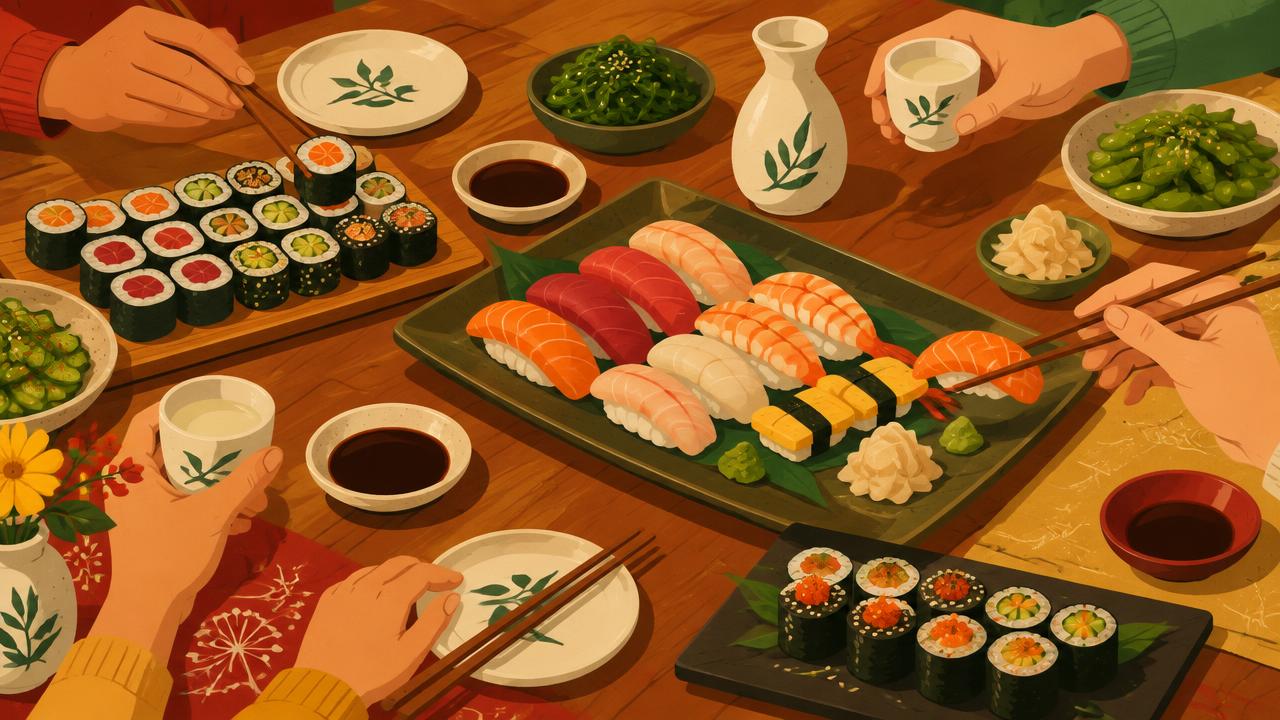
A sushi dinner party has a reputation for being intimidating, mostly because people picture themselves individually slicing sashimi to restaurant standards under pressure. The better approach, and the one that actually works for a home gathering, is to set up a build-your-own sushi station where the host handles the rice and a few key preparations in advance, and guests do the rolling themselves. It turns dinner into an activity, which is exactly what a good dinner party should be.
The keys to pulling this off are sourcing fish responsibly, getting the rice genuinely right, and organizing your prep so that almost nothing needs your attention once people arrive. Here's a full plan that scales comfortably to six guests.
Chef's Notes / Key Takeaways
- ▸Buy fish labeled 'sushi-grade' or 'sashimi-grade' only from a trusted fishmonger the same day you serve it.
- ▸Properly seasoned sushi rice, not the fish, is the foundation every good roll depends on.
- ▸A build-your-own roll station keeps guests engaged and takes pressure off the host.
- ▸Have both raw and cooked fillings so guests with different preferences can all participate.
- ▸Prep components ahead of time; assembly should be the only thing happening once guests arrive.
Sourcing Fish Safely
If you're serving raw fish, buy only fish explicitly labeled "sushi-grade" or "sashimi-grade" from a fishmonger you trust, ideally the same day you plan to serve it. This labeling isn't strictly regulated by law in most places, so a reputable seller who handles and freezes fish properly matters more than the label itself. Good options for beginners include previously frozen tuna, salmon, and yellowtail, all of which slice cleanly and taste familiar to most guests.
If sourcing raw fish feels risky or you have guests who prefer cooked options, lean on cooked shrimp, crab stick, smoked salmon, and seared tuna or salmon (torched briefly with a kitchen torch or in a very hot pan for 20 seconds per side). A mixed spread of raw and cooked fillings means everyone can build a plate they're comfortable with.
The Rice Is the Real Skill
Sushi rice, not the fish, is what separates good homemade sushi from mediocre homemade sushi. Use short-grain Japanese rice, rinse it in several changes of cold water until the water runs mostly clear, and cook it with a slightly reduced water ratio (about 1 cup rice to 1 cup water, rather than the usual 1:1.2) since sticky rice is the goal here.
Seasoning the Rice
While the rice is still hot, fold in sushi vinegar — a mix of rice vinegar, sugar, and salt (roughly 3 tablespoons vinegar, 2 tablespoons sugar, 1 teaspoon salt per 2 cups uncooked rice, warmed just until dissolved). Spread the rice in a wide, shallow bowl or baking dish and fold the vinegar mixture through with a cutting motion using a rice paddle or spatula, fanning it as you go to cool it quickly and give it a glossy sheen. Cover with a damp towel and use within a couple of hours; refrigerating sushi rice makes it hard and dull.
Setting Up the Roll Station
Lay out components in stations rather than one long buffet line, so guests aren't crowding a single stretch of table. A practical layout: rice and nori sheets at one station, raw and cooked fish at another, and vegetables and sauces at a third.
| Station | What to Include |
|---|---|
| Base | Seasoned sushi rice, toasted nori sheets, bamboo rolling mats |
| Protein | Sliced raw tuna/salmon, cooked shrimp, crab stick, seared fish |
| Vegetables | Cucumber sticks, avocado, carrot, scallion, pickled radish |
| Sauces & extras | Soy sauce, wasabi, pickled ginger, spicy mayo, toasted sesame seeds |
Teaching Guests the Basics
Most guests have never rolled sushi, so a two-minute demonstration at the start of the party saves a lot of confusion later. Show them how to spread a thin, even layer of rice over nori (leaving a bare inch at the top edge to seal the roll), how to line up fillings just below center, and how to use the bamboo mat to roll everything tightly away from themselves before pressing to seal the edge with a few grains of rice or water.
Hand Rolls Are the Easier Entry Point
If a full rolled roll feels like too much for a first attempt, hand rolls (temaki) are far more forgiving. A guest simply places rice and fillings on one half of a nori triangle and rolls it into a cone shape by hand — no mat, no precision cutting required, and it still looks and tastes like real sushi.
The point of a sushi dinner party isn't flawless, restaurant-perfect rolls — it's handing people the ingredients and letting the slightly messy process become the entertainment.
Timing the Evening
Do all the slicing, rice cooking, and sauce-making before guests arrive; none of it should happen live. Cook rice about 1 to 2 hours ahead and keep it covered at room temperature. Slice fish and vegetables just before guests arrive and keep raw fish refrigerated until the moment you set it out, pulling it only once people are ready to start rolling.
Round out the table with a couple of dishes that need no last-minute effort, like edamame with flaky salt, a simple cucumber sunomono salad, or miso soup kept warm on low heat. These give guests something to nibble on while they get the hang of rolling, and they round the meal out into something that feels complete rather than just a novelty activity. By the end of the night, the mismatched rolls sitting on everyone's plates will look a lot better than they probably expect, and that's really the whole point.
Related recipes
- How to Make Japanese Ramen Broth at Home
Great ramen starts hours before the noodles ever hit boiling water, with a broth built layer by layer from bones, aromatics, and a seasoning base called tare. Here's how to build real ramen broth at home, no restaurant equipment required.
- How to Make Onigiri Rice Balls
Shape tender Japanese rice balls with classic fillings and crisp nori using a method that keeps the grains light rather than compressed. The guide explains the essential choices, common mistakes, and useful variations in clear practical terms.
- What Is Japanese Food Culture? A Complete Guide
Japanese food culture is built on principles that go beyond any single dish: seasonality, balance, and respect for ingredients. Understanding these ideas changes how you cook and eat Japanese food at home.