
What Is Shredded Beef Szechuan-Style?
4 min read
Quick Overview
- Prep time
- 30 minutes
- Cook time
- 20 minutes
- Total time
- 50 minutes
- Servings
- 4
- Difficulty
- Intermediate
- Cuisine
- Chinese (Sichuan)
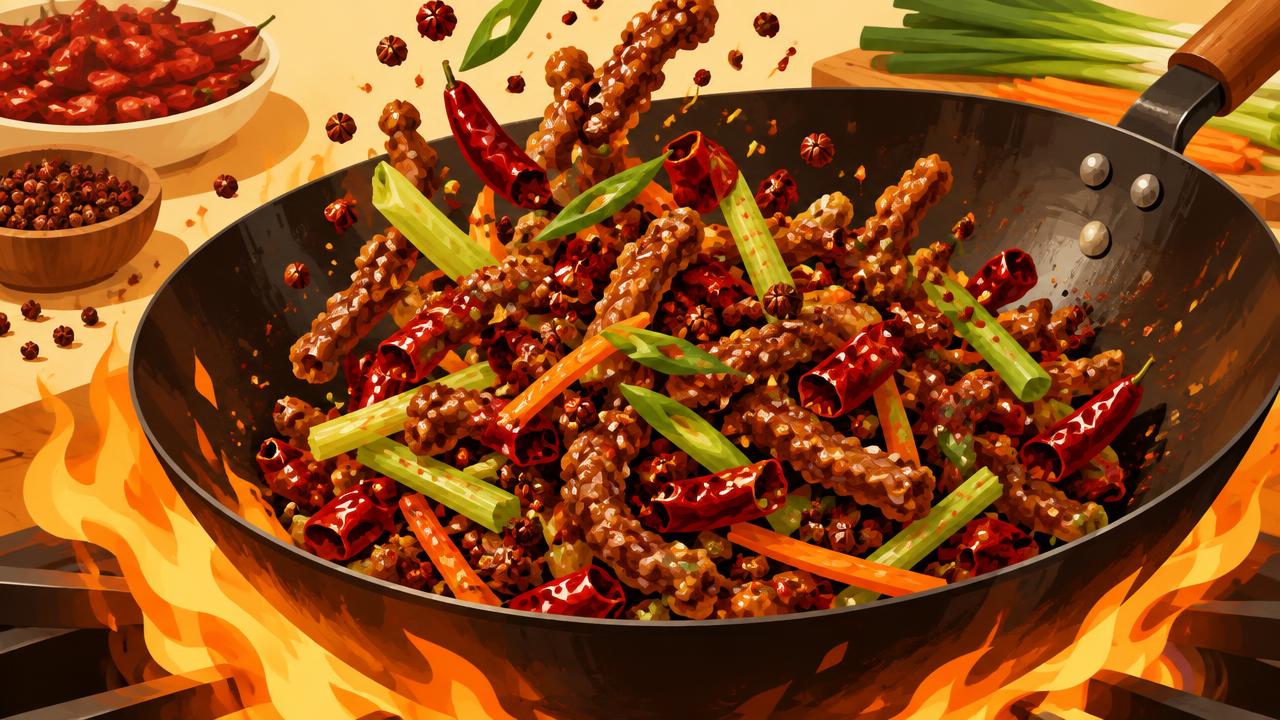
Szechuan shredded beef is one of those dishes whose name undersells it. "Shredded beef" sounds soft and stewy, but the dish it actually describes is closer to the opposite: strands of beef fried until their edges turn crisp and slightly chewy, then tossed through a fiery, numbing sauce built on dried chilies, Sichuan peppercorn, and fermented chili bean paste. It belongs to a family of Sichuan preparations known as gan bian, or "dry-fried," where the goal is concentrated flavor and textural contrast rather than a saucy finish.
If you've had this dish at a Sichuan restaurant and wondered why the beef seemed almost jerky-like rather than tender in the usual stir-fry sense, that's intentional. The chew is part of the appeal, standing in contrast to the crisp julienned vegetables and the numbing tingle of the peppercorns.
Chef's Notes / Key Takeaways
- ▸Szechuan shredded beef is typically double-fried or dry-fried until the beef strands turn crisp and slightly chewy, not left soft as in a quick stir-fry.
- ▸Cutting the beef into fine, matchstick-thin shreds along the grain gives the correct chewy-crisp texture after frying.
- ▸The dish's flavor profile balances chili heat, Sichuan peppercorn's numbing quality, and a touch of sugar for lacquer and roundness.
- ▸Julienned vegetables like carrot and celery are cooked briefly so they stay crisp against the beef's texture.
- ▸This is a drier, more concentrated dish than saucier beef stir-fries, closer to a dry-fried '干煸' (gan bian) preparation.
What Makes It "Szechuan-Style"
Three things separate this dish from a generic beef stir-fry: the cut and texture of the beef, the use of doubanjiang (fermented broad bean and chili paste) as the flavor base, and the presence of whole Sichuan peppercorns, which deliver the tongue-tingling numbness known as ma la, "numbing and spicy," that defines much of Sichuan cuisine. Remove any one of these and you have a perfectly good stir-fry, but not this specific dish.
Cutting the Beef Correctly
The shreds should be thin, roughly the width of a matchstick, and cut mostly along the grain rather than sharply against it. This is different advice than you'll hear for most stir-fried beef, where cutting against the grain is standard for tenderness. Here, cutting with the grain preserves some fiber structure so the beef holds together as fine strands through frying instead of falling apart into crumbles. Partially freezing the beef for 20 to 30 minutes before slicing makes this much easier to do neatly.
| Element | Purpose | Common Substitute |
|---|---|---|
| Doubanjiang | Fermented, savory chili base | Chili garlic sauce plus a pinch of miso (less authentic) |
| Dried red chilies | Aromatic heat, visual cue | Chili flakes added at the end |
| Sichuan peppercorn | Numbing "ma" sensation | None truly equivalent; can omit if unavailable |
| Shaoxing wine | Marinade aromatics, tenderizing | Dry sherry |
Frying Method: Shallow-Fry vs. Dry-Fry
Restaurants typically shallow-fry the beef shreds in a generous amount of oil at a moderate temperature, around 325°F (163°C), which crisps the surface quickly without overcooking the interior. At home, a simpler dry-fry method works nearly as well: cook the marinated beef in just a few tablespoons of oil over fairly high heat, stirring frequently, until most of the moisture has cooked off and the edges turn deeply browned and slightly crisp. It takes a bit longer, roughly 6 to 8 minutes, but avoids dealing with a full pot of frying oil.
Whichever method you choose, resist the urge to rush this stage. Beef that goes into the sauce still soft and pale won't develop the characteristic chew that makes this dish distinct from a standard stir-fry.
Building the Sauce
The sauce comes together fast and should never simmer for long. Toast the dried chilies and Sichuan peppercorns briefly in oil just until fragrant — burnt chilies turn bitter almost instantly, so keep the heat moderate and your eyes on the pan. Doubanjiang goes in next, cooked just long enough to release its red oil, followed by a small amount of sugar and dark soy sauce for color and a rounding sweetness, and a splash of Chinkiang vinegar right at the end for brightness that keeps the dish from tasting flat or one-note.
Good Szechuan shredded beef isn't about maximum heat — it's about the tingling buzz of peppercorn working against chili warmth, with crisp beef and vegetables holding their own texture underneath.
Choosing and Preparing Vegetables
Carrot and celery are the traditional pairing, cut into matchsticks that mirror the beef's shape and size so everything eats evenly in one bite. They go into the wok only briefly, just long enough to warm through and take on a little char at the edges while staying distinctly crisp. Avoid overcooking them into softness; the contrast between crunchy vegetable and chewy beef is central to the dish's appeal.
Serving and Adjusting the Heat
Serve this dish hot, straight from the wok, over plain steamed rice, which helps balance the concentrated chili and peppercorn flavors. If you're sensitive to heat, reduce the dried chilies to two or three and use a milder doubanjiang; if you love the tingle, add an extra half-tablespoon of Sichuan peppercorns, lightly crushed just before adding, to intensify the numbing sensation.
Leftovers keep for up to three days refrigerated, though the beef will soften somewhat as it reabsorbs moisture from the sauce; a quick reheat in a hot, dry pan for a minute or two helps recrisp the edges before serving again.
Understanding shredded beef Szechuan-style really comes down to recognizing it as a textural dish first and a spicy one second. Get the beef properly crisp-chewy, keep the vegetables snappy, and let the doubanjiang and peppercorns do the heavy lifting on flavor, and you'll have a dish that tastes like it came straight out of a Chengdu kitchen.
Related recipes
- How to Make Chinese Scallion Pancakes
Make crisp, flaky Chinese scallion pancakes with a simple hot-water dough, aromatic scallion oil, and reliable stovetop technique. The guide explains the essential choices, common mistakes, and useful variations in clear practical terms.
- How to Make Mapo Tofu at Home
Mapo tofu is a fast, fiery Sichuan classic that lives or dies on a well-built sauce and gentle handling of soft tofu. This guide covers the technique, ingredient substitutions, and the small details that separate home versions from restaurant ones.
- How to Make Char Siu Pork
Learn how to make Cantonese char siu with a glossy savory-sweet glaze, tender pork, and deep caramelized edges in a home oven. The guide explains the essential choices, common mistakes, and useful variations in clear practical terms.