
What Is a Lychee Fruit?
4 min read
Quick Overview
- Prep time
- 5 minutes
- Cook time
- 0 minutes
- Total time
- 5 minutes
- Servings
- 1 pound (about 15-20 fruit)
- Difficulty
- Easy
- Cuisine
- Pan-Asian
Lychee (also spelled litchi) is a small tropical fruit that grows in clusters on evergreen trees native to the Guangdong and Fujian provinces of southern China. It has been cultivated there for more than 2,000 years and remains one of the most prized summer fruits across Asia. If you have only encountered lychee floating in a bubble tea or packed in syrup at the back of a pantry, fresh lychee is a genuine revelation: fragrant, juicy, and nothing like the softened, overly sweet canned version.
What Lychee Looks Like and How It Grows
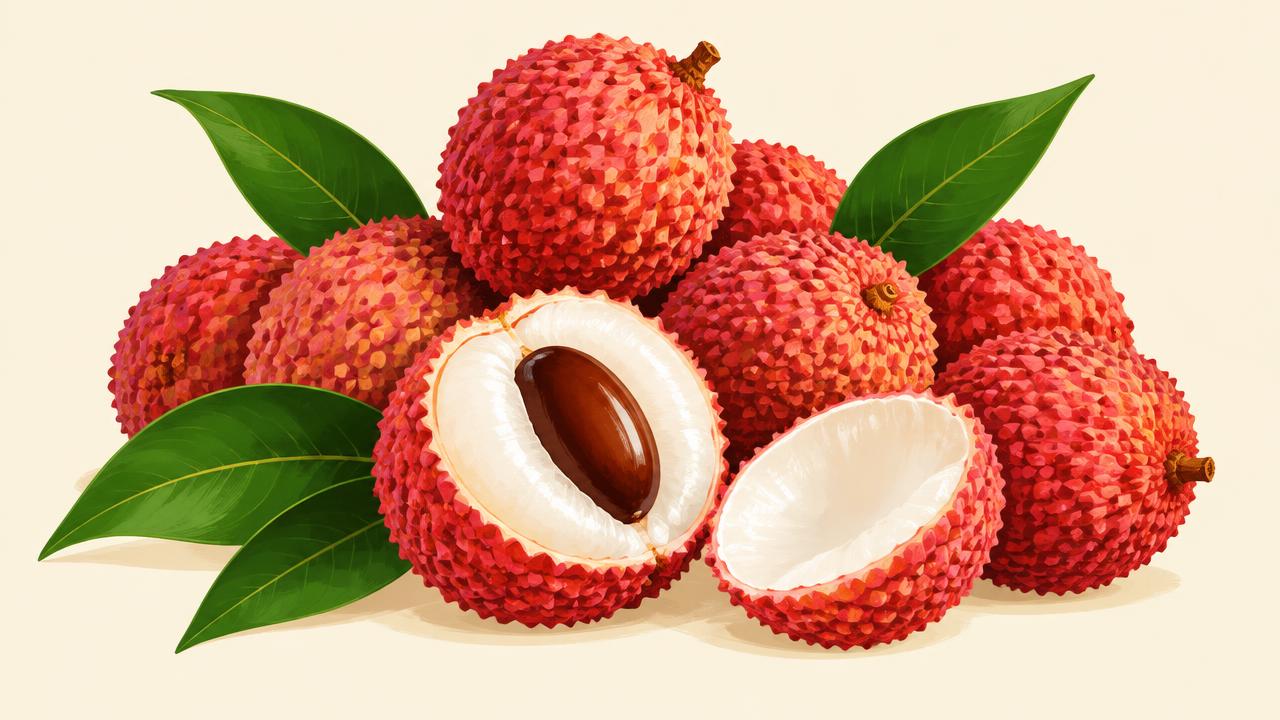
Each lychee fruit is roughly the size of a large strawberry or a golf ball, encased in a thin, leathery shell covered in small bumps. Unripe lychee is green, and as it matures the shell turns a vivid pink-red, sometimes with rosy or brownish patches. Inside, the shell peels away easily to reveal translucent, pearly white flesh wrapped around a single smooth, dark brown seed. The seed is not edible and should always be removed before eating.
Chef's Notes / Key Takeaways
- ▸Lychee is a small, round tropical fruit native to southern China with a rough red-pink shell and sweet, floral white flesh.
- ▸Fresh lychee tastes like a cross between grape, pear, and rose water, with a texture similar to a peeled grape.
- ▸Choose lychee with shells that are firm, rosy, and only slightly dry; avoid brown, cracked, or mushy fruit.
- ▸Peak lychee season in the U.S. runs from late May through July, though canned lychee is available year-round.
- ▸One large seed sits at the center of each fruit and must be removed before eating; it is not edible.
- ▸Lychee is low in calories but high in vitamin C, making it a popular addition to fruit salads, cocktails, and desserts.
Lychee trees thrive in subtropical climates with a distinct cool season, which is why most of the world's supply still comes from China, Vietnam, Thailand, India, and Madagascar, though smaller crops are grown in Florida, Hawaii, and California.
What Does Lychee Taste Like?
Fresh lychee has a delicate, perfumed sweetness that is genuinely hard to compare to anything else, though people often describe it as a mix of grape, pear, watermelon, and rose water. The texture is similar to a peeled grape: firm yet yielding, with a burst of juice on the first bite. There is a light floral quality to the aroma that makes lychee popular in desserts, cocktails, and even skincare products.
A ripe lychee should smell faintly sweet and floral at the stem end. If it smells like fermenting fruit or vinegar, it has passed its prime.
Canned lychee, packed in sugar syrup, is sweeter and softer than fresh fruit, and it loses much of that signature floral perfume during processing. It works fine in cocktails or as a quick dessert topping, but fresh lychee in season is worth seeking out at Asian grocery stores or well-stocked produce markets.
How to Choose and Store Lychee
Because lychee doesn't ripen further once picked, selecting good fruit at the store matters. Look for shells that are rosy to deep red with minimal brown discoloration, and avoid any that look gray, cracked, or dried out. The fruit should feel firm when gently squeezed; softness or visible juice leaking through the shell usually signals spoilage.
| Sign | What It Means | What to Do |
|---|---|---|
| Bright pink-red shell | Fully ripe, ready to eat | Buy and eat within a week |
| Green tinged shell | Slightly underripe | Still edible, less sweet |
| Brown, dry shell | Aging or dehydrating | Use soon or discard if fruit smells off |
| Soft spots or leaking juice | Spoiling | Avoid or discard |
| Cracked shell | Exposed to air, spoils fast | Eat same day only |
Store unwashed lychee in a perforated plastic bag in the crisper drawer of your refrigerator, where it will keep for about one week. For longer storage, peel and pit the fruit, then freeze it in a single layer before transferring to an airtight container; frozen lychee keeps for several months and makes a refreshing addition to smoothies.
How to Eat Lychee
Eating fresh lychee is simple once you know the technique. Score the shell near the stem with your thumbnail, peel it away in a few pieces, then gently squeeze the fruit to release the flesh. Slice partway through to remove the pit, and the fruit is ready to eat.
Lychee is delicious on its own, chilled straight from the refrigerator, but it also shows up in a wide range of dishes: tossed into fruit salads, blended into sorbets, muddled into cocktails and mocktails, added to iced tea, or paired with coconut milk for a simple Southeast Asian-style dessert. In Cantonese cooking, lychee sometimes appears in savory dishes too, paired with pork or duck for a sweet contrast.
Nutrition and Buying Tips
Lychee is naturally low in calories, with about 60-70 calories per 100 grams, and it is an excellent source of vitamin C, providing more than 100% of the daily recommended intake in a single serving. It also contains small amounts of potassium, copper, and antioxidants called polyphenols.
- Buy lychee still attached to small stem clusters for the freshest option
- Choose fruit with a uniform rosy color and no visible mold near the stem
- Avoid eating lychee on an empty stomach in very large quantities, as the fruit's natural sugars can affect blood sugar in some people
- Rinse thoroughly before peeling since the bumpy shell can trap dust and residue
Whether you find it fresh in early summer or canned in the international aisle, lychee is a fruit worth getting to know. Its floral sweetness and satisfying texture make it a standout addition to both sweet and savory dishes, and once you've had a truly ripe one, it's easy to see why it has been prized across Asia for thousands of years.
Related recipes
- What Is the Difference Between Manapua and Steamed Pork Buns?
Manapua and steamed pork buns both trace back to Chinese char siu bao, but they've evolved into distinct dishes with their own size, texture, and place on the plate. Understanding the difference means understanding how Hawaii reshaped an immigrant dish into something entirely its own.
- Vietnamese Pho Herbs and Garnishes
A practical guide to the fresh herbs, citrus, chiles, and sauces served with pho, plus how to use each garnish without overwhelming the broth. The guide explains the essential choices, common mistakes, and useful variations in clear practical terms.
- What Is Korean Barbeque Marinated In?
Korean barbecue's signature sweet-savory flavor comes from marinades built on soy sauce, garlic, sesame oil, and often pureed fruit as a natural tenderizer. Understanding these building blocks lets you customize marinades for beef, pork, or chicken with confidence.