
Filipino Batchoy Recipe (Iloilo Style)
4 min read
Quick Overview
- Prep time
- 30 minutes
- Cook time
- 2.5 hours
- Total time
- 3 hours
- Servings
- 4-6 servings
- Difficulty
- Intermediate
- Cuisine
- Filipino (Ilonggo)
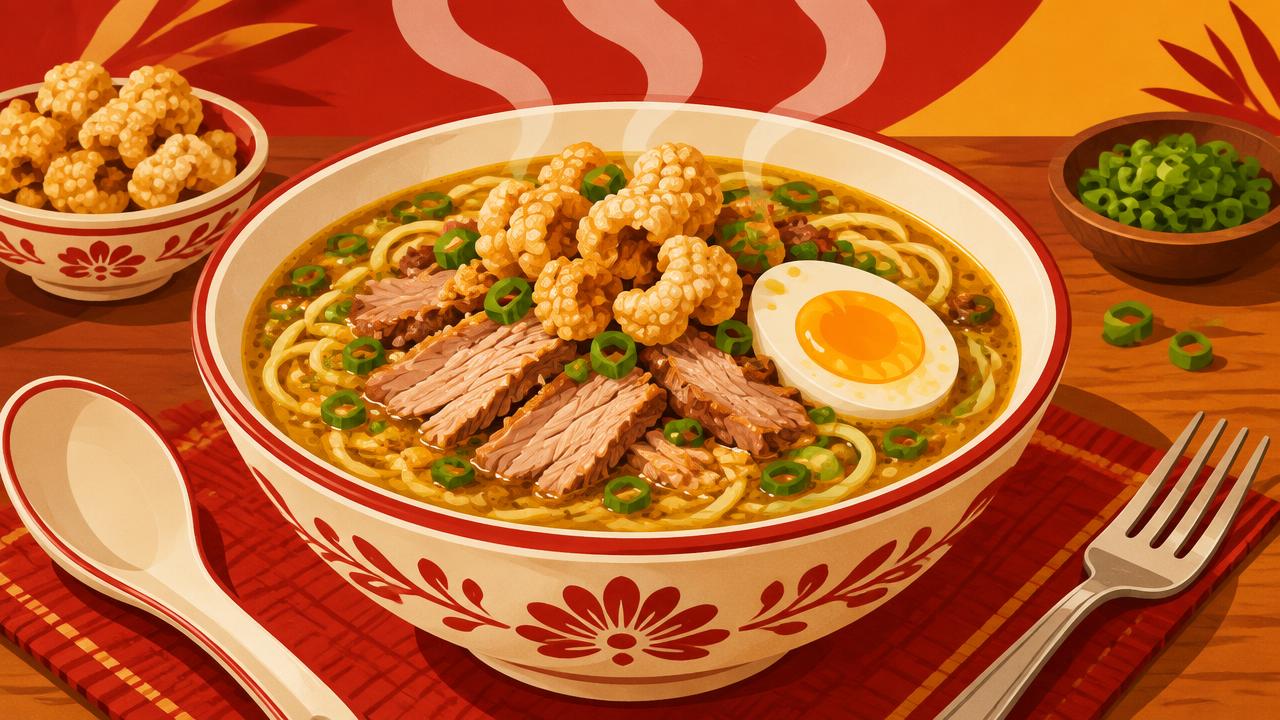
Batchoy is one of the Philippines' most recognizable noodle soups, and true Ilonggo cooks will tell you that the dish's soul lives in Iloilo City, particularly around the famous La Paz district that gave the soup its more formal name, La Paz Batchoy. At its heart, batchoy is a pork bone and shrimp broth loaded with offal, thin egg noodles, and a final flourish of crushed chicharrón that turns soft and crackly-crisp as it soaks into the hot broth.
This is not a quick weeknight soup, and it shouldn't be treated as one. The long simmer is what separates a genuinely rich, cloudy-golden batchoy broth from a thin, forgettable one. But the payoff is significant: a bowl that tastes like it was ladled straight from a market stall in Iloilo, layered with pork fat, funky-savory shrimp depth, and crunch in every bite.
Chef's Notes / Key Takeaways
- ▸The broth's signature depth comes from simmering pork bones and offal low and slow, then reinforcing it with shrimp stock or bagoong.
- ▸Fresh miki egg noodles are traditional; fresh Chinese egg noodles are the closest widely available substitute.
- ▸Crispy pork rinds (chicharrón) must be added just before serving to preserve their crunch.
- ▸Toppings like sliced pork liver, offal, and green onions should be prepped before the broth finishes so assembly is fast.
- ▸A splash of patis (fish sauce) at the end brightens and rounds out the broth's saltiness.
Building the Broth
The broth is the backbone of batchoy, and it depends on two things: pork bones simmered long enough to release collagen, and shrimp shells or bouillon to add a briny, umami-rich undertone that distinguishes batchoy from a plain pork noodle soup. Start by blanching your pork bones and belly in boiling water for about 5 minutes. This step removes surface impurities and blood, which is what keeps the final broth clear rather than muddy and gray.
After blanching and rinsing, simmer the bones with aromatics — onion, garlic, ginger, and peppercorns — for a full 2 to 2.5 hours at a gentle simmer, not a rolling boil. A hard boil emulsifies fat into the broth and makes it cloudy and greasy rather than clean-tasting; a slow simmer extracts flavor and collagen while keeping the broth clear.
Why Shrimp Matters
Many home versions of batchoy skip the shrimp component entirely and end up with a broth that tastes like plain pork soup. The traditional recipe simmers shrimp shells and heads alongside the pork bones, which contributes a subtle sweetness and oceanic depth that rounds out the pork's richness. If you don't have access to shell-on shrimp, a good-quality shrimp bouillon cube or paste is an acceptable substitute — just add it toward the last 30 minutes of simmering so its flavor doesn't cook off.
The Toppings That Define Batchoy
| Topping | Texture/Flavor Role | Preparation Note |
|---|---|---|
| Chicharrón (pork rinds) | Crunch, saltiness | Add only right before serving |
| Pork liver | Mineral richness | Blanch briefly, do not overcook |
| Sliced pork belly | Fattiness, chew | Simmer in broth until tender, then slice |
| Offal (intestine/spleen) | Traditional depth | Boil separately, optional for milder version |
| Fried garlic bits | Aromatic crunch | Fry until golden, not dark brown |
Offal is optional for cooks who want a milder version, but it is part of what makes batchoy authentically batchoy rather than just a pork noodle soup. If you do include it, boil it separately in water with a splash of vinegar and bay leaf to tame any strong odor before slicing it thin and adding it as a topping.
Batchoy isn't just a soup you cook — it's a soup you assemble at the very last minute, because the crunch of the chicharrón only lasts as long as it takes to eat.
Noodles: Miki vs. Substitutes
Traditional batchoy uses fresh miki noodles, a thick, slightly chewy egg noodle common in Visayan cooking. If your local Asian grocery doesn't carry miki specifically, fresh Chinese egg noodles (the kind used for lo mein) are the closest substitute in both texture and flavor. Avoid dried noodles if you can help it — the springy, slightly bouncy texture of fresh noodles is part of what makes each spoonful satisfying against the crunchy chicharrón.
Assembly Order Matters
Because the noodles, broth, and toppings all cook at different times, the best approach is to prep everything ahead and assemble quickly: cook the noodles last (they only need 1-2 minutes), blanch the liver just before ladling broth, and crush the chicharrón directly over each bowl at the table if you're serving guests, so everyone gets maximum crunch.
Serving and Storage
Serve batchoy immediately with calamansi wedges and extra patis on the side for guests who like it saltier. The broth keeps well refrigerated for up to 4 days and freezes for up to 3 months — just store it separately from the noodles and chicharrón, which do not hold up to reheating or freezing. When you're ready to eat again, reheat the broth, cook fresh noodles, and top with freshly crushed chicharrón for the same crackling texture as the first bowl.
Once you've made a proper batch of Iloilo-style batchoy from scratch, it's easy to understand why it has such a devoted following — it's rich, layered, and impossible to eat quietly.
Related recipes
- What Is the Difference Between Manapua and Steamed Pork Buns?
Manapua and steamed pork buns both trace back to Chinese char siu bao, but they've evolved into distinct dishes with their own size, texture, and place on the plate. Understanding the difference means understanding how Hawaii reshaped an immigrant dish into something entirely its own.
- Vietnamese Pho Herbs and Garnishes
A practical guide to the fresh herbs, citrus, chiles, and sauces served with pho, plus how to use each garnish without overwhelming the broth. The guide explains the essential choices, common mistakes, and useful variations in clear practical terms.
- What Is Korean Barbeque Marinated In?
Korean barbecue's signature sweet-savory flavor comes from marinades built on soy sauce, garlic, sesame oil, and often pureed fruit as a natural tenderizer. Understanding these building blocks lets you customize marinades for beef, pork, or chicken with confidence.