
Chinese Noodle Ingredients
5 min read
Quick Overview
- Prep time
- N/A
- Cook time
- N/A
- Total time
- N/A
- Servings
- N/A
- Difficulty
- Reference guide
- Cuisine
- Chinese (regional, various)
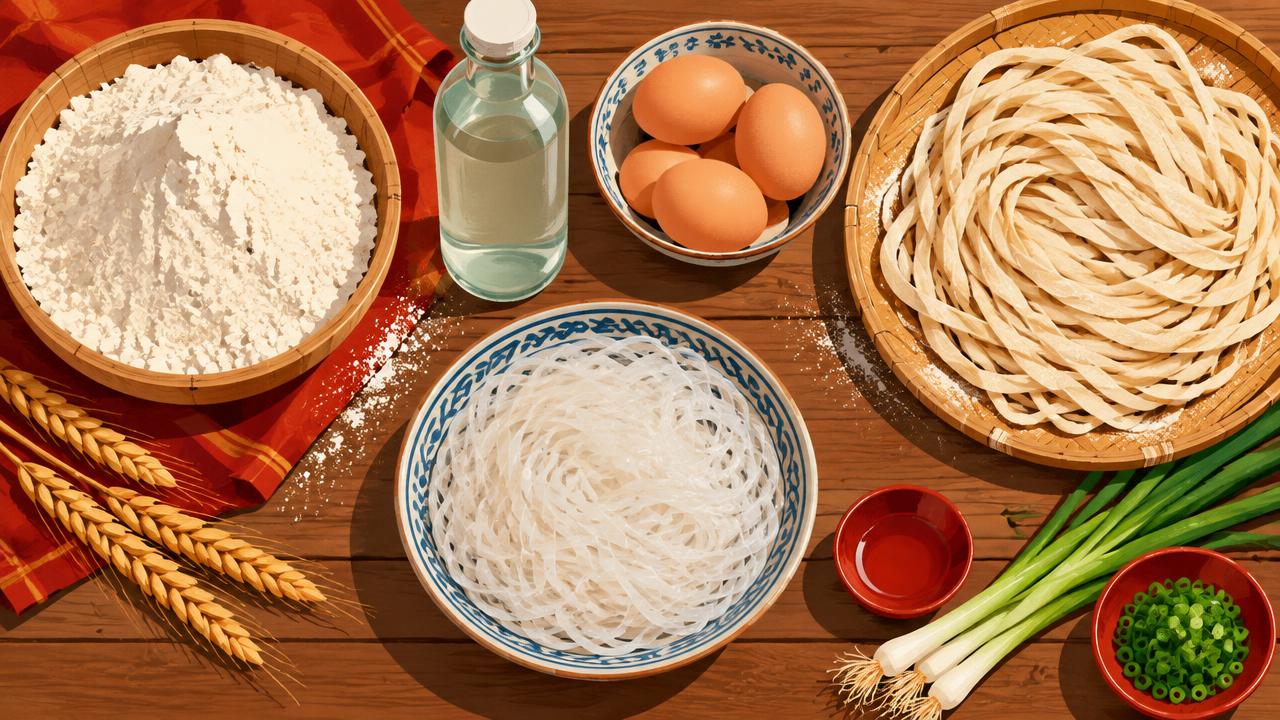
Walk down the noodle aisle of any well-stocked Chinese grocery store and the sheer range can be overwhelming: fresh, dried, fat, thin, yellow, white, translucent, opaque. Almost all of that variation comes down to a small handful of base ingredients and how they're processed. Once you understand those bases, choosing the right noodle for a dish, or substituting one for another, becomes far less of a guessing game.
This guide breaks down the major categories of Chinese noodles by what they're actually made of, along with practical notes on how each one cooks and where it shines.
Chef's Notes / Key Takeaways
- ▸Most Chinese noodles fall into four base categories: wheat, egg-and-wheat, rice, and mung bean or sweet potato starch.
- ▸Alkaline salts (kansui or lye water) are what give noodles like ramen and Hong Kong-style egg noodles their springy bite and yellow tint.
- ▸Rice noodles come in many widths, from hair-thin vermicelli to wide he fen sheets, and are naturally gluten-free.
- ▸Mung bean and sweet potato starch noodles, often labeled glass or cellophane noodles, turn translucent and chewy rather than opaque and soft.
- ▸Matching the noodle's ingredient base to its intended dish matters more than most home cooks realize; substitutions change both texture and how well noodles hold sauce.
Wheat Noodles
Plain wheat noodles are made simply from wheat flour, water, and salt, without egg or alkaline additives. They tend to be white or pale cream in color and have a soft, slightly chewy bite. Hand-pulled noodles (la mian) and knife-cut noodles (dao xiao mian), both northern Chinese specialties, fall into this category, and their texture depends heavily on gluten development from kneading and resting rather than any special ingredient.
These noodles are relatively neutral in flavor, which makes them a good match for richly seasoned broths and sauces, such as beef noodle soup or noodles tossed in a savory bean paste.
Alkaline Wheat Noodles
Add kansui, an alkaline mineral solution (usually potassium carbonate and sodium carbonate), and wheat flour noodles transform. The alkalinity strengthens gluten bonds, giving the noodles their characteristic springy, bouncy bite and a pale yellow color, even without any egg present. Ramen noodles and many Cantonese-style wonton noodles use this method. If a recipe calls for these and you can't find kansui-treated noodles, a small amount of baked baking soda whisked into water and used to boil regular wheat noodles can approximate the effect, though the texture won't be identical.
Egg Noodles
Egg noodles combine wheat flour with whole eggs or egg yolks instead of, or in addition to, plain water. The egg adds richness, a deeper yellow color, and a firmer, slightly more elastic texture than water-based wheat noodles. Hong Kong-style thin egg noodles, used in dishes like wonton noodle soup and pan-fried noodles (yi mein), typically use both egg and a touch of alkaline treatment, which is why they hold their shape so well even after being deep-fried and then simmered.
| Noodle Type | Base Ingredient | Typical Texture | Common Dishes |
|---|---|---|---|
| Plain wheat noodles | Wheat flour, water | Soft, mildly chewy | Beef noodle soup, dan dan noodles |
| Alkaline wheat noodles | Wheat flour, kansui | Springy, bouncy | Ramen, wonton noodle soup |
| Egg noodles | Wheat flour, egg | Firm, elastic, rich | Yi mein, lo mein |
| Rice noodles | Rice flour, water | Soft to chewy, neutral flavor | Pho-adjacent soups, chow fun, rice vermicelli salads |
| Mung bean / sweet potato noodles | Starch, water | Translucent, slippery, chewy | Ants climbing a tree, hot pot, japchae-style dishes |
Rice Noodles
Made from rice flour and water, rice noodles are naturally gluten-free and come in a wide range of widths and forms. Rice vermicelli (mi fen) is hair-thin and dries into brittle bundles that need only a brief soak in hot water before use. He fen, by contrast, is a wide, flat, fresh rice noodle sheet often used in Cantonese stir-fries like beef chow fun, prized for its silky, slightly slippery texture that holds up to high-heat wok cooking without falling apart.
Because rice noodles have no gluten structure, they behave very differently from wheat noodles in the pan: they're more prone to breaking if over-stirred and can turn gummy if overcooked, so timing matters more than with a forgiving wheat noodle.
Fresh vs. Dried Rice Noodles
Fresh rice noodle sheets, sold refrigerated, need only a quick separation and warm-through in the wok, while dried rice noodles require rehydrating in hot (not boiling) water for 10 to 20 minutes depending on thickness before cooking further. Boiling dried rice noodles directly, the way you might treat pasta, often overcooks the outside before the center has softened.
Mung Bean and Sweet Potato Starch Noodles
Often labeled "glass noodles" or "cellophane noodles," these are made not from grain flour at all but from purified starch, most commonly mung bean starch, though sweet potato and potato starch versions are also common, particularly in dishes with Korean or northern Chinese influence. They cook up translucent, glossy, and distinctly chewy-slippery, quite different from the softer bite of wheat or rice noodles.
They need only a brief soak in hot water, generally 5 to 10 minutes, until pliable, since they cook through very quickly once added to a hot dish. Overcooking turns them mushy and prone to clumping, so add them toward the end of cooking in stir-fries and soups.
Knowing what a noodle is made of tells you almost everything about how it will behave in the pan — how much it can absorb, how easily it breaks, and how long it can sit in a hot broth before turning to mush.
Choosing the Right Noodle for a Dish
As a rule of thumb, reach for alkaline or egg noodles when you want a noodle to stand up to a big, bold broth without going soft too quickly; choose rice noodles when you want something lighter and neutral that can carry delicate flavors, particularly in stir-fries and cold salads; and use starch-based glass noodles when you want a distinctly slippery, chewy texture that soaks up sauce without becoming heavy.
- Soups with strong, long-simmered broths: alkaline wheat or egg noodles.
- Quick, high-heat stir-fries: fresh rice noodle sheets or thin wheat noodles.
- Cold noodle salads: rice vermicelli or thin wheat noodles, rinsed well after cooking.
- Braises and hot pot: mung bean or sweet potato starch noodles, added near the end.
Substituting one noodle type for another isn't a disaster, but it does change the dish more than most people expect. A wheat noodle swapped for rice noodles in a soup will hold up longer in hot liquid; a rice noodle swapped for glass noodles in a stir-fry will change the whole mouthfeel from soft to slippery-chewy. Once you know the ingredient story behind each type, those substitutions become intentional choices rather than guesswork.
Related recipes
- How to Make Chinese Scallion Pancakes
Make crisp, flaky Chinese scallion pancakes with a simple hot-water dough, aromatic scallion oil, and reliable stovetop technique. The guide explains the essential choices, common mistakes, and useful variations in clear practical terms.
- How to Make Mapo Tofu at Home
Mapo tofu is a fast, fiery Sichuan classic that lives or dies on a well-built sauce and gentle handling of soft tofu. This guide covers the technique, ingredient substitutions, and the small details that separate home versions from restaurant ones.
- How to Make Char Siu Pork
Learn how to make Cantonese char siu with a glossy savory-sweet glaze, tender pork, and deep caramelized edges in a home oven. The guide explains the essential choices, common mistakes, and useful variations in clear practical terms.