
Asian Spicy Basil Beef Noodles
5 min read
Quick Overview
- Prep time
- 15 minutes
- Cook time
- 12 minutes
- Total time
- 27 minutes
- Servings
- 3-4 servings
- Difficulty
- Intermediate
- Cuisine
- Thai-inspired Asian
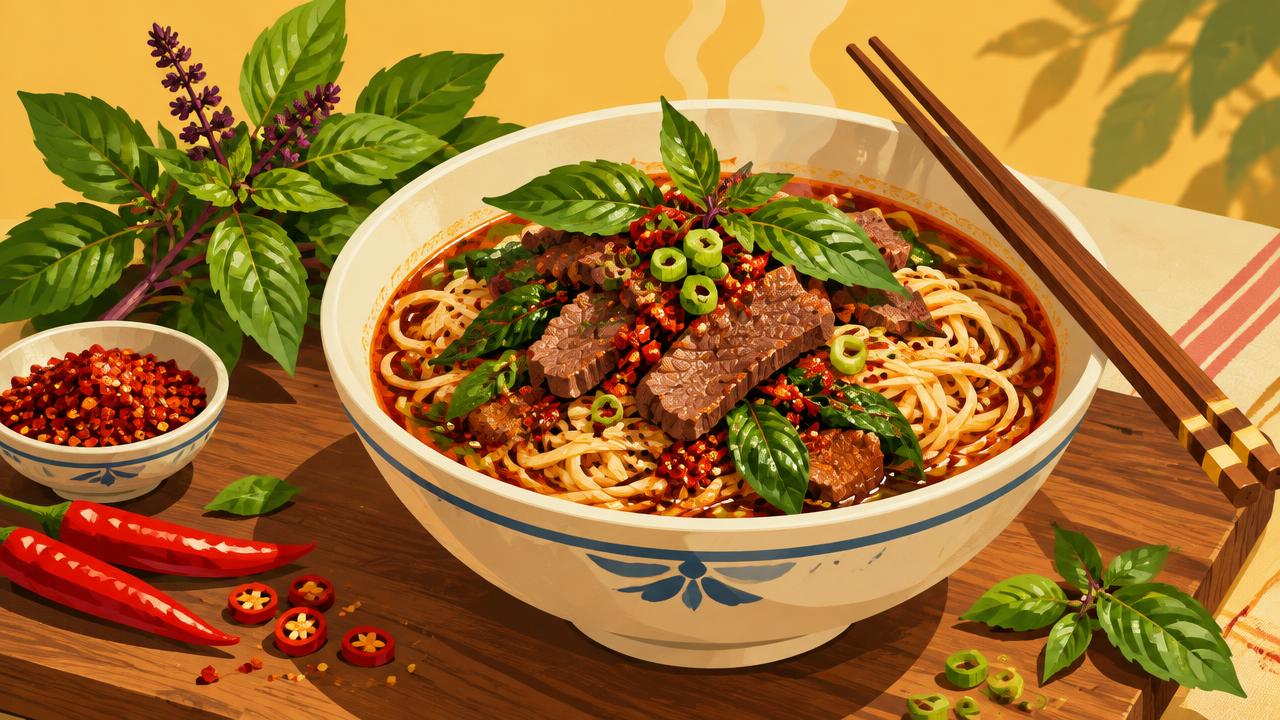
There is a particular kind of magic that happens when raw beef, screaming-hot oil, and a fistful of Thai basil meet in a wok. The pan hisses, smoke curls up, and within a minute or two you have a plate of noodles that tastes like it came from a night market stall rather than your own kitchen. Spicy basil beef noodles, loosely inspired by Thai pad kra pao and drunken noodles, are one of those dishes that reward technique far more than they reward fancy ingredients.
I make this dish at least twice a month because it hits every craving at once: heat from fresh chilies, savory depth from fish sauce and soy, and that unmistakable anise-pepper perfume of Thai basil that no other herb can replicate. The good news is that once you understand the rhythm of the cooking process, this becomes a 25-minute weeknight dinner rather than a special-occasion project.
Chef's Notes / Key Takeaways
- ▸A screaming-hot wok or skillet is essential for proper sear and smoky wok hei flavor.
- ▸Slice beef against the grain and freeze it briefly for paper-thin, tender slices.
- ▸Balance the sauce with fish sauce, soy sauce, sugar, and chilies for authentic sweet-salty-spicy depth.
- ▸Add Thai basil at the very end so it stays fragrant instead of wilting into mush.
- ▸Wide rice noodles or flat egg noodles work best for soaking up the sauce.
Why Wok Hei Matters More Than the Recipe
If you have ever wondered why restaurant stir-fries taste smokier and more complex than home versions, the answer is heat, not secret ingredients. Wok hei, literally "breath of the wok," is the slightly charred, smoky flavor that develops when food hits a pan hot enough to make oil shimmer almost instantly. Home stoves rarely reach the BTU output of a restaurant burner, but you can get close by preheating your pan for a full two minutes before adding oil, and by cooking in small batches so the pan temperature never crashes.
Overcrowding is the single biggest reason home stir-fries turn out steamed and gray instead of seared and glossy. If your wok or skillet is smaller than 12 inches, cook the beef in two batches rather than one.
Choosing and Slicing the Beef
Flank steak, skirt steak, and sirloin all work well here because they have enough marbling to stay tender during a fast sear. Whatever cut you choose, slice it thinly against the grain — meaning perpendicular to the visible muscle fibers — so each bite is tender rather than chewy. A trick that makes this much easier: pop the beef in the freezer for 15-20 minutes before slicing. The slight firming makes it far easier to get consistent, paper-thin slices with a regular kitchen knife.
Building the Sauce
The sauce for this dish is deceptively simple, but the ratio matters. Too much fish sauce and it turns funky; too much sugar and it tastes like teriyaki instead of Thai stir-fry. I use a combination of light soy sauce for saltiness, a small amount of dark soy sauce purely for color and a hint of molasses-like depth, fish sauce for umami, oyster sauce for body, and a touch of sugar to round out the chili heat.
| Sauce Component | Amount | Purpose |
|---|---|---|
| Soy sauce | 2 tbsp | Primary salt and umami |
| Dark soy sauce | 1 tbsp | Color and mild sweetness |
| Fish sauce | 1 tbsp | Savory depth |
| Oyster sauce | 1 tbsp | Body and gloss |
| Sugar | 1 tsp | Balances chili heat |
Mix the sauce in a small bowl before you turn on the heat. Once you start cooking, everything moves fast, and fumbling for bottles while the beef sits in a hot pan is how you end up with tough, overcooked meat.
Ingredients
- 8 oz (225g) flat rice noodles or fresh wide rice noodles
- 12 oz (340g) flank steak or sirloin, thinly sliced against the grain
- 3 tablespoons vegetable or peanut oil, divided
- 5 cloves garlic, minced
- 3-4 Thai chilies, finely chopped (adjust to taste)
- 1 small red bell pepper, sliced thin
- 1 small onion, sliced
- 1 cup Thai basil leaves, packed
- 2 tablespoons soy sauce
- 1 tablespoon dark soy sauce (for color)
- 1 tablespoon fish sauce
- 1 tablespoon oyster sauce
- 1 teaspoon sugar
- 2 tablespoons water or beef stock
- 1 teaspoon cornstarch mixed with 1 tablespoon water (optional, for extra glossy sauce)
Method
- Soak dried rice noodles in hot tap water for 20-25 minutes until pliable but still firm, then drain well; if using fresh noodles, loosen them gently with your hands.
- Slice the beef thinly against the grain, then toss with 1 teaspoon soy sauce and a pinch of cornstarch; set aside to marinate for 10 minutes.
- Whisk together soy sauce, dark soy sauce, fish sauce, oyster sauce, sugar, and water or stock in a small bowl to make the sauce.
- Heat 1.5 tablespoons oil in a wok or large skillet over high heat until just smoking, then add the beef in a single layer and sear undisturbed for 45 seconds before stirring; cook until just browned but not fully cooked through, then remove to a plate.
- Add the remaining oil to the wok, then stir-fry garlic and chilies for 15-20 seconds until fragrant but not burnt.
- Add onion and bell pepper, stir-frying over high heat for 1-2 minutes until slightly softened but still crisp.
- Return the beef to the wok along with any accumulated juices, then add the noodles and pour the sauce over everything.
- Toss continuously with tongs or a spatula for 2-3 minutes so the noodles absorb the sauce evenly and pick up color from the dark soy sauce.
- If the sauce looks thin, push everything to one side, add the cornstarch slurry to the liquid pooling in the wok, and stir until glossy before combining.
- Remove from heat, fold in the Thai basil leaves until just wilted, and serve immediately while hot.
The difference between a limp stir-fry and a vibrant one usually comes down to just two things: pan temperature and timing the basil last.
Common Mistakes to Avoid
The most frequent misstep is adding the basil too early. Thai basil loses its punchy, licorice-like aroma within a minute of hitting hot sauce, so it should go in only after you have removed the pan from direct heat. Another common error is using sweet Italian basil as a substitute — it wilts differently and lacks the peppery bite that defines this dish. If Thai basil truly isn't available, holy basil is the better substitute; regular basil is a distant third option at best.
Overcooked noodles are another pitfall. Rice noodles continue to soften from residual heat, so slightly undersoak them if you plan to stir-fry for more than two minutes.
Serving and Storage
Serve immediately with lime wedges and extra chili flakes on the side. This dish does not reheat particularly well because the noodles continue absorbing sauce and turn gummy, so it's best made fresh and eaten the same day. If you must store leftovers, keep the sauce separate from the noodles when possible, and reheat quickly in a hot pan rather than the microwave.
Spicy basil beef noodles prove that big, punchy flavor doesn't require a long ingredient list — it requires heat, timing, and a generous handful of the right herb at the right moment.
Related recipes
- What Is the Difference Between Manapua and Steamed Pork Buns?
Manapua and steamed pork buns both trace back to Chinese char siu bao, but they've evolved into distinct dishes with their own size, texture, and place on the plate. Understanding the difference means understanding how Hawaii reshaped an immigrant dish into something entirely its own.
- Vietnamese Pho Herbs and Garnishes
A practical guide to the fresh herbs, citrus, chiles, and sauces served with pho, plus how to use each garnish without overwhelming the broth. The guide explains the essential choices, common mistakes, and useful variations in clear practical terms.
- What Is Korean Barbeque Marinated In?
Korean barbecue's signature sweet-savory flavor comes from marinades built on soy sauce, garlic, sesame oil, and often pureed fruit as a natural tenderizer. Understanding these building blocks lets you customize marinades for beef, pork, or chicken with confidence.