
What Is the Difference Between Manapua and Steamed Pork Buns?
4 min read
Quick Overview
- Prep time
- N/A
- Cook time
- N/A
- Total time
- N/A
- Servings
- N/A
- Difficulty
- N/A
- Cuisine
- Pan-Asian
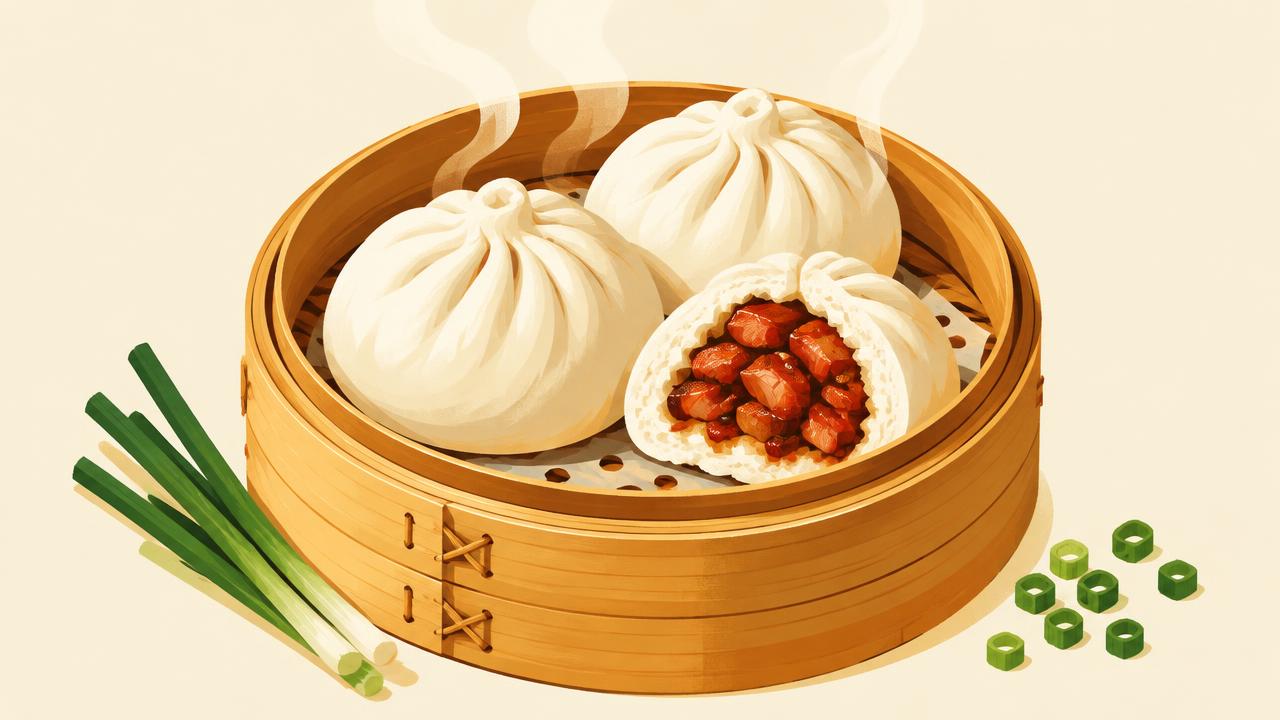
At first glance, manapua and a classic Chinese steamed pork bun look like the same food wearing two different names. Both start from a soft, slightly sweet, yeasted dough wrapped around a filling of barbecued pork. Both trace back to the same ancestor: char siu bao, the Cantonese steamed bun filled with char siu, or Chinese barbecued pork. But manapua isn't just a regional nickname for the same bun. It's a genuinely distinct dish, shaped by more than a century of immigration, adaptation, and Hawaii's uniquely blended food culture.
Where Manapua Came From
Manapua's story begins with Chinese laborers who arrived in Hawaii in large numbers in the mid-to-late 1800s, many working on sugar plantations. They brought char siu bao with them, and over time, as Chinese immigrant communities settled into Hawaiian life, the dish adapted to local tastes, local ingredients, and local eating habits. The name itself reflects this blending: manapua comes from a shortened form of the Hawaiian phrase mea ono puaa, meaning roughly "delicious pork thing." It's a name that belongs entirely to Hawaii, even though the dish's roots are Cantonese.
Chef's Notes / Key Takeaways
- ▸Manapua is a Hawaiian adaptation of the Chinese char siu bao, developed by Chinese immigrant communities in Hawaii in the early 20th century.
- ▸Manapua is typically larger than a standard Chinese steamed pork bun and is commonly baked as well as steamed, unlike its Cantonese counterpart.
- ▸Traditional Cantonese char siu bao is almost always steamed, with a snowy white, slightly sweet dough and a smaller, more delicate size.
- ▸Manapua fillings have expanded well beyond char siu to include curry chicken, kalua pork, and even hot dogs, reflecting Hawaii's multicultural food scene.
- ▸The name manapua comes from the Hawaiian phrase mea ono puaa, meaning 'delicious pork thing.'
- ▸Both dishes share the same basic yeasted bao dough, but portion size, bake-versus-steam methods, and filling variety set them apart.
Manapua vendors, historically often traveling by bicycle or truck through Honolulu neighborhoods with hot boxes of buns, helped cement the dish as a fixture of everyday life rather than a specialty restaurant item. That accessibility shaped what manapua became: a hearty, portable, satisfying food meant for a quick and filling meal, not a delicate dim sum course meant to be shared in small bites among several dishes.
Size and Texture Differences
One of the most immediately noticeable differences is size. A traditional Cantonese char siu bao served at dim sum is designed to be one of many small dishes on the table, so it's typically palm-sized, meant for a bite or two per person alongside other dumplings and buns. Manapua, by contrast, is usually considerably larger, often closer to the size of a fist, designed to function as a standalone snack or light meal on its own.
Manapua was built for one hand and one meal on the go, while char siu bao was built to share in small bites among several other dim sum dishes.
Texture is another point of divergence. Classic Cantonese char siu bao is almost always steamed, giving it a soft, matte, snow-white exterior with a pillowy, slightly springy bite. Manapua is frequently baked instead of, or in addition to, steamed, which produces a firmer, glossier, golden-brown crust that holds up better to the more casual, on-the-go way it's typically eaten. Baked manapua also travels and reheats a bit better than a purely steamed bun, which mattered for a food originally sold from carts and trucks around the islands.
Filling Variety
Both dishes share char siu as the classic, defining filling: cubes of pork marinated in a sweet, savory blend that typically includes soy sauce, hoisin, five-spice powder, and honey, then roasted until slightly caramelized at the edges. In traditional Cantonese bakeries, char siu bao filling stays fairly consistent from shop to shop, with maybe a sweeter or saltier variation depending on the region.
Manapua fillings, on the other hand, have expanded dramatically to reflect Hawaii's multicultural food landscape. It's common to find manapua filled with curry chicken, kalua pork (the smoky, shredded pork traditionally cooked in an underground imu oven), sweet potato, hot dog, or even Portuguese sausage, alongside the original char siu version. This variety reflects Hawaii's broader food culture, where Chinese, Japanese, Filipino, Portuguese, and Native Hawaiian influences all sit on the same plate, often literally.
Comparing the Two Side by Side
| Feature | Manapua | Traditional Steamed Pork Bun (Char Siu Bao) |
|---|---|---|
| Origin | Hawaii, adapted by Chinese immigrant communities | Guangdong province, southern China |
| Typical size | Large, fist-sized | Smaller, palm-sized |
| Cooking method | Often baked, sometimes steamed | Almost always steamed |
| Common fillings | Char siu, curry chicken, kalua pork, sweet potato, hot dog | Primarily char siu, occasionally other roasted meats |
| Typical setting | Plate lunch counters, bakeries, convenience stores across Hawaii | Dim sum restaurants and Chinese bakeries worldwide |
Why the Distinction Matters
Calling manapua "just a Chinese steamed pork bun" overlooks the century of local history that shaped it into something new. It's a useful reminder of how immigrant foods evolve once they land in a new place: they don't stay frozen in their original form, they respond to local ingredients, local eating habits, and the practical needs of the people selling and eating them. Manapua's larger size and frequent baking reflect its role as an everyday, one-handed meal in Hawaii's plate lunch culture, while char siu bao's smaller, steamed form reflects its role in a shared, multi-course dim sum spread.
If you're trying to spot the difference on a menu or in a bakery case, size and cooking method are your best clues. A large, golden-brown, glossy bun the size of your fist is almost certainly manapua, likely with a filling that goes beyond classic char siu. A smaller, snow-white, pillowy bun steamed to a soft finish, usually served two or three to an order alongside other dim sum dishes, is the traditional Cantonese char siu bao. Both are worth seeking out, and understanding their differences only makes eating either one more interesting.
Related recipes
- Vietnamese Pho Herbs and Garnishes
A practical guide to the fresh herbs, citrus, chiles, and sauces served with pho, plus how to use each garnish without overwhelming the broth. The guide explains the essential choices, common mistakes, and useful variations in clear practical terms.
- What Is Korean Barbeque Marinated In?
Korean barbecue's signature sweet-savory flavor comes from marinades built on soy sauce, garlic, sesame oil, and often pureed fruit as a natural tenderizer. Understanding these building blocks lets you customize marinades for beef, pork, or chicken with confidence.
- How to Cook Korean Dishes in a Stone Pot
A Korean stone pot, or dolsot, retains heat so intensely that it can hold food at a sizzle long after it leaves the stove, and it creates the coveted crispy rice crust that defines dolsot bibimbap. This guide covers how to season, heat, and cook with one safely and confidently.