
What Is Korean Barbeque Marinated In?
5 min read
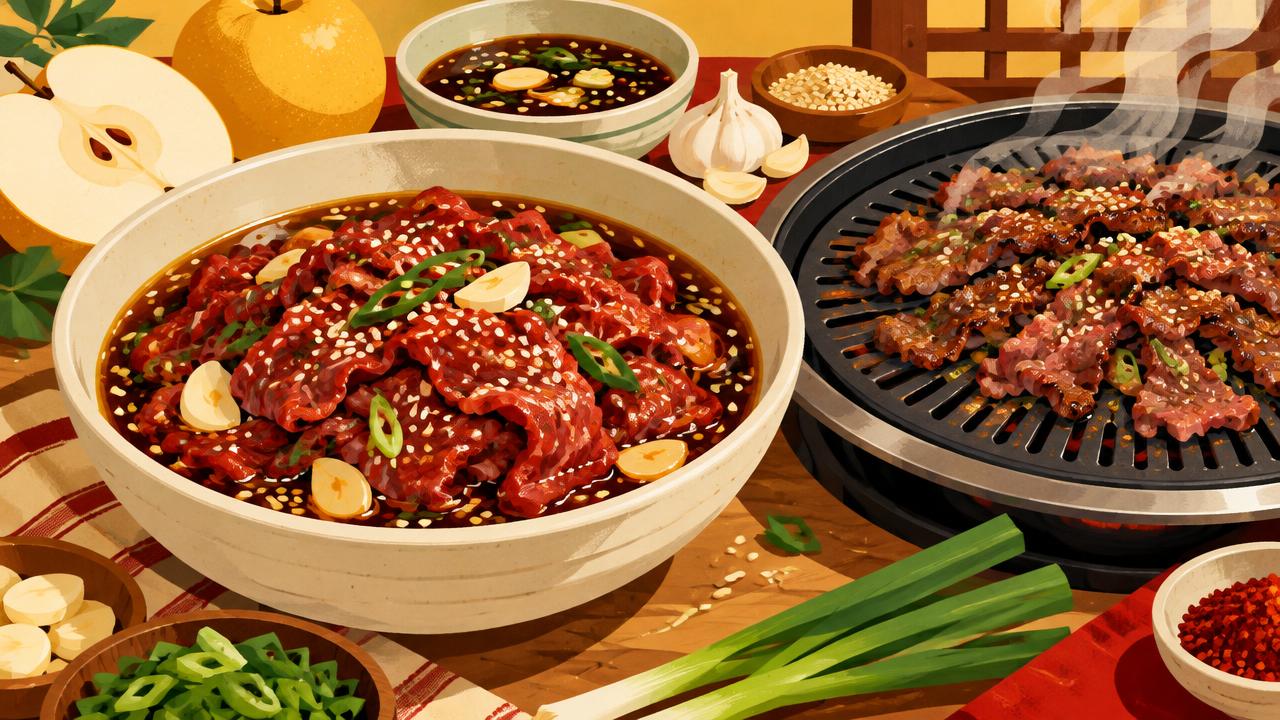
Quick Overview
- Prep time
- 15 minutes (plus 2-24 hours marinating)
- Cook time
- 10 minutes
- Total time
- 25 minutes (plus marinating time)
- Servings
- 4 servings
- Difficulty
- Easy
- Cuisine
- Korean
Ask ten different home cooks what makes Korean barbecue taste the way it does, and most will point to the grill itself — the char, the smoke, the sizzle of thin-sliced beef hitting a hot surface. But the real signature of Korean barbecue is built well before the meat ever touches heat: the marinade. Whether it's bulgogi, galbi, or spicy dak galbi chicken, nearly every version relies on a small set of foundational ingredients that balance sweet, savory, and umami in a way that's instantly recognizable.
Understanding what goes into these marinades — and more importantly, why each ingredient is there — means you can build a proper Korean barbecue marinade from your own pantry rather than relying on a bottled sauce. It also means you can adjust for the cut of meat you're using, since a thin bulgogi slice and a thick short rib need slightly different treatment.
Chef's Notes / Key Takeaways
- ▸Soy sauce, garlic, sesame oil, and sugar form the flavor backbone of nearly every Korean BBQ marinade.
- ▸Pureed Asian pear or kiwi contains natural enzymes that tenderize meat and add subtle sweetness.
- ▸Bulgogi and galbi marinades are similar in base but differ slightly in sweetness and cut of meat used.
- ▸Marinating time matters: thin-sliced meats like bulgogi need only 30-60 minutes, while short ribs benefit from several hours.
- ▸Gochujang-based marinades add heat and a deeper, fermented complexity for spicier styles like dak galbi.
The Core Building Blocks
Nearly every traditional Korean BBQ marinade rests on the same handful of ingredients, in roughly the same proportions, regardless of whether you're marinating beef, pork, or chicken.
| Ingredient | Role in the Marinade |
|---|---|
| Soy sauce | Primary salt and umami base |
| Brown sugar | Sweetness that balances soy's saltiness and helps caramelization |
| Asian pear or kiwi (grated) | Natural enzymes tenderize meat; adds subtle sweetness |
| Garlic and ginger | Aromatic depth and slight pungency |
| Sesame oil | Nutty aroma and richness |
| Grated onion | Additional tenderizing enzymes and mild sweetness |
| Mirin or rice wine | Adds acidity and helps flavors penetrate the meat |
Soy sauce and sugar alone create a fairly one-dimensional teriyaki-like flavor; what elevates Korean barbecue marinades is the fruit component. Grated Asian pear, and sometimes kiwi, contains natural proteolytic enzymes that break down muscle fibers, which is why traditionally marinated Korean BBQ meat has that signature tender, almost velvety bite even on inexpensive cuts.
Bulgogi vs. Galbi: What Actually Differs
Bulgogi (thin-sliced beef, usually ribeye or sirloin) and galbi (marinated short ribs) share nearly the same marinade base, but a few details set them apart. Galbi marinades often include a touch more sugar and sometimes a splash of Coca-Cola or Sprite in home recipes — an unconventional but genuinely effective way to add sweetness and additional tenderizing acidity to the tougher short rib cut. Bulgogi, being thinner and already tender, doesn't need this extra step and marinates for a much shorter time.
Dak galbi, the spicy stir-fried chicken version, swaps much of the soy-sugar balance for gochujang (Korean red chili paste), giving it a fermented heat that the beef-based marinades don't have.
Marinating Times by Cut
One of the most overlooked details in Korean barbecue is that marinating time should match the thickness of the meat, not just personal preference. Thin bulgogi slices marinate quickly because the surface area exposed to the marinade is so large; leaving them too long, especially with fruit enzymes at work, can turn the texture unpleasantly mushy.
- Thin-sliced beef (bulgogi): 30 minutes to 4 hours maximum.
- Short ribs (galbi), bone-in: 4-12 hours, up to overnight for deeper flavor.
- Chicken thighs (dak galbi): 1-3 hours, since chicken absorbs marinade quickly.
- Pork belly or shoulder: 2-6 hours, depending on thickness.
The fruit in a Korean barbecue marinade isn't there for flavor alone — it's doing real tenderizing work, which is exactly why timing the marinade matters as much as the ingredient list.
Building Your Own Marinade
To build a basic Korean BBQ marinade at home, combine soy sauce, brown sugar, grated Asian pear, grated onion, minced garlic, grated ginger, toasted sesame oil, and a splash of mirin or rice wine. Whisk until the sugar dissolves, then toss with thinly sliced beef or pork. This single formula adapts to almost any protein: use it as-is for bulgogi, add a spoonful of gochujang for a spicier version, or swap in pear puree with a touch of soy-glazed sweetness for chicken bulgogi.
Ingredients
- 1/2 cup soy sauce
- 1/4 cup brown sugar
- 1/4 cup grated Asian pear (or kiwi)
- 1/4 cup grated onion
- 2 tablespoons minced garlic
- 1 tablespoon grated ginger
- 2 tablespoons toasted sesame oil
- 2 tablespoons mirin or rice wine
- 1 tablespoon toasted sesame seeds
- 2 green onions, finely chopped
- 1/4 teaspoon ground black pepper
- 2 lbs (900g) thinly sliced beef (ribeye or sirloin) or pork shoulder
Method
- Peel and core the Asian pear, then grate it finely along with the onion, using a box grater or food processor.
- In a large bowl, combine the soy sauce, brown sugar, grated pear, grated onion, garlic, ginger, sesame oil, mirin, sesame seeds, green onions, and black pepper; whisk until the sugar dissolves.
- Add the sliced beef or pork to the marinade, making sure each piece is well coated.
- Cover and refrigerate for at least 30 minutes for thin-sliced meat, or up to 4 hours for a deeper flavor; avoid marinating thin-sliced beef longer than 4-6 hours, as the pear's enzymes can make it mushy.
- Preheat a grill, grill pan, or cast-iron skillet over medium-high heat until very hot.
- Remove the meat from the marinade, letting excess liquid drip off, and discard the leftover marinade.
- Grill the meat in a single layer for 2-3 minutes per side, or until caramelized at the edges and cooked through.
- Rest for a couple of minutes before serving with lettuce wraps, rice, and ssamjang.
Common Mistakes
The biggest mistake is leaving thin-sliced meat in a fruit-based marinade too long, resulting in a mealy, overly soft texture rather than tender. The second is cooking directly in leftover marinade — because it's been in contact with raw meat, it needs to be either discarded or boiled thoroughly before being reused as a sauce. Finally, cooking over too low a heat prevents the sugar in the marinade from caramelizing properly, leaving you with steamed rather than seared, slightly charred meat.
Once you understand the roles that soy, sugar, fruit, and aromatics play, you'll never need a bottled Korean BBQ sauce again — just adjust the ratios to suit the cut of meat and the level of sweetness or heat you're after.
Related recipes
- What Is the Difference Between Manapua and Steamed Pork Buns?
Manapua and steamed pork buns both trace back to Chinese char siu bao, but they've evolved into distinct dishes with their own size, texture, and place on the plate. Understanding the difference means understanding how Hawaii reshaped an immigrant dish into something entirely its own.
- Vietnamese Pho Herbs and Garnishes
A practical guide to the fresh herbs, citrus, chiles, and sauces served with pho, plus how to use each garnish without overwhelming the broth. The guide explains the essential choices, common mistakes, and useful variations in clear practical terms.
- How to Cook Korean Dishes in a Stone Pot
A Korean stone pot, or dolsot, retains heat so intensely that it can hold food at a sizzle long after it leaves the stove, and it creates the coveted crispy rice crust that defines dolsot bibimbap. This guide covers how to season, heat, and cook with one safely and confidently.