
Japanese Yakisoba Noodles with Vegetables
4 min read
Quick Overview
- Prep time
- 15 minutes
- Cook time
- 15 minutes
- Total time
- 30 minutes
- Servings
- 4 servings
- Difficulty
- Easy
- Cuisine
- Japanese
Yakisoba is the noodle dish you make when you want dinner in half an hour but still want it to taste like it came from a bustling street stall in Osaka. It's a stir-fry at heart: springy wheat noodles, a mound of quick-cooked vegetables, thin slices of pork, and a sauce that's tangy, faintly sweet, and deeply savory all at once. It's one of the most forgiving Japanese dishes to cook at home, which is exactly why it belongs in a weeknight rotation.
The dish takes its name from "yaki" (fried or grilled) and "soba" (noodles), though it has nothing to do with buckwheat soba. Yakisoba noodles are wheat noodles, pre-steamed and lightly oiled, usually sold in vacuum-sealed packs in the refrigerated section near tofu and dumplings. If you can't find them, ramen noodles work as a close substitute, and even fresh chow mein noodles will get you most of the way there.
Chef's Notes / Key Takeaways
- ▸Yakisoba noodles are pre-steamed wheat noodles, not the same as buckwheat soba.
- ▸A hot, wide pan or wok is essential for browning without steaming the noodles.
- ▸The sauce is a simple blend of Worcestershire, ketchup, oyster sauce, and soy sauce.
- ▸Loosen refrigerated noodles under warm water before cooking to prevent clumping.
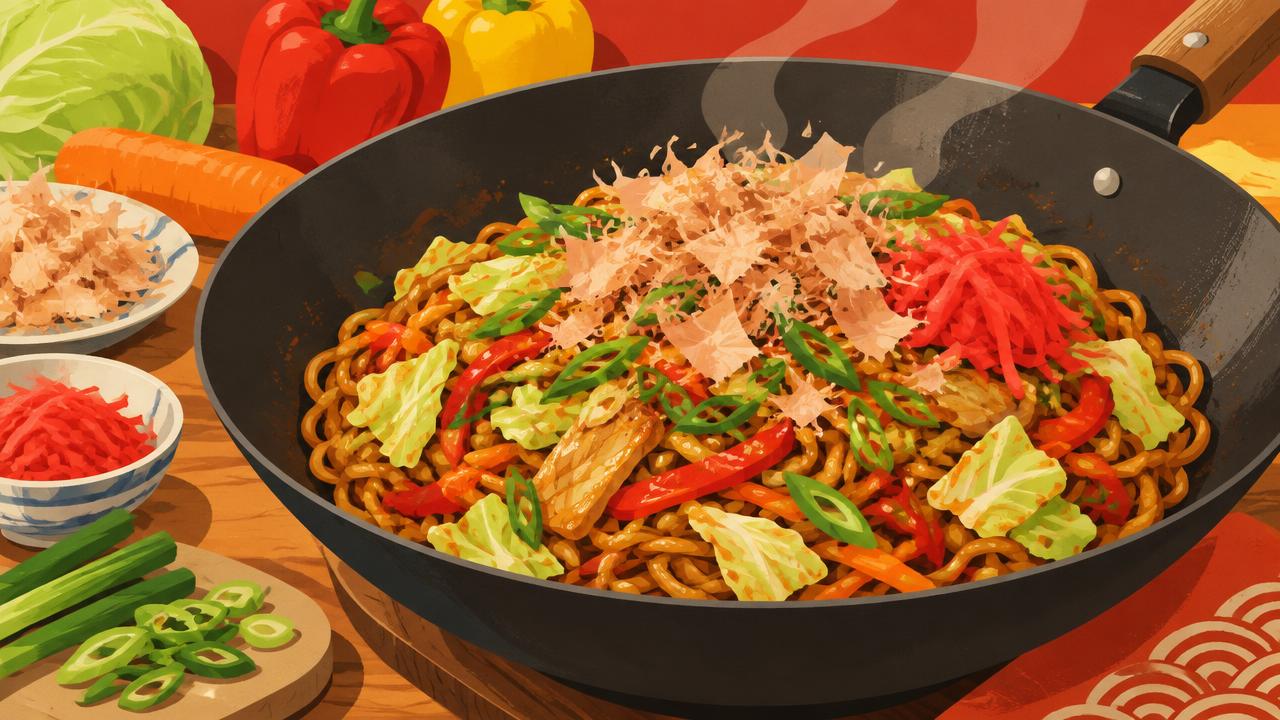
- ▸Classic toppings are pickled ginger, aonori seaweed powder, and bonito flakes.
What Makes Yakisoba Taste Like Yakisoba
The sauce is the whole story. Traditional yakisoba sauce is a Worcestershire-based blend, closer in spirit to okonomiyaki or tonkatsu sauce than to soy-based stir-fry sauces. You can buy bottled yakisoba sauce at Asian grocery stores, but a homemade version made from pantry staples tastes just as good and lets you control the sweetness and salt.
The Four-Ingredient Sauce
Worcestershire sauce provides the tangy backbone, ketchup adds sweetness and body, oyster sauce contributes umami depth, and a splash of soy sauce rounds it out with saltiness. A small pinch of sugar smooths any sharp edges. Whisk these together before you start cooking, because once the wok is hot, things move fast.
Choosing and Prepping Your Noodles
Fresh yakisoba noodles are already cooked, so your job is really just to heat them through and separate any clumps. Cold noodles straight from the fridge tend to stick together in a solid brick. Running them briefly under warm tap water and gently teasing the strands apart with your fingers solves this before they ever hit the pan.
If you're using dried noodles instead, boil them about a minute short of the package instructions, then rinse under cold water to stop the cooking and remove excess starch. Slightly underdone noodles hold up better once they're stir-fried a second time.
The Stir-Fry Method, Step by Step
A wide, heavy skillet or a wok is important here. Yakisoba wants high heat and room to move; a crowded pan steams the noodles into a soggy mass instead of giving them any char. Cook proteins first and set them aside, then vegetables, then bring everything back together with the noodles and sauce at the end. This sequence keeps the pork from overcooking and the cabbage from turning limp before the noodles are even in the pan.
Common Mistakes to Avoid
- Overcrowding the pan, which drops the temperature and steams rather than sears.
- Adding sauce too early, before the noodles are hot, which causes uneven coating.
- Overcooking the cabbage until it's mushy — it should still have a slight bite.
- Skipping the splash of water when adding noodles, which helps loosen and reheat them evenly.
Protein and Vegetable Variations
Thinly sliced pork belly is the classic choice, prized for the fat it renders into the pan, but yakisoba is genuinely flexible. Chicken thigh, shrimp, or even sliced Spam are common substitutes across Japan. For a vegetarian version, skip the meat and oyster sauce (swap in a mushroom-based vegetarian oyster sauce), and bulk up the vegetables with shiitake mushrooms or bean sprouts.
| Ingredient | Standard Amount | Easy Swap |
|---|---|---|
| Protein | Pork belly, sliced thin | Chicken thigh, shrimp, or tofu |
| Noodles | Fresh yakisoba noodles | Ramen or chow mein noodles |
| Oyster sauce | 1 tablespoon | Vegetarian mushroom oyster sauce |
| Cabbage | 1/4 head, chopped | Bean sprouts or napa cabbage |
| Topping | Bonito flakes | Toasted sesame seeds (for vegetarian) |
The difference between good yakisoba and great yakisoba usually comes down to heat: get the pan properly hot before anything goes in, and don't be afraid to let the noodles sit still for a few seconds to pick up a little color.
Serving Yakisoba
Yakisoba is typically served on its own as a light meal, often at festivals straight from a griddle into a paper tray. At home, a fried egg on top turns it into a more substantial dinner, and a side of pickled cucumbers cuts through the richness of the sauce. The toppings aren't just decoration: pickled ginger adds brightness, aonori adds a faint oceanic aroma, and bonito flakes bring a last wave of umami as they curl from the residual heat.
Leftovers keep in the fridge for about two days, though the noodles will soften further on reheating. A quick blast in a hot skillet with a splash of water revives them better than a microwave does. Once you've made the sauce a few times, you'll find yourself eyeballing it — a little more ketchup for the kids, a little more Worcestershire when you want extra tang.
Related recipes
- How to Make Japanese Ramen Broth at Home
Great ramen starts hours before the noodles ever hit boiling water, with a broth built layer by layer from bones, aromatics, and a seasoning base called tare. Here's how to build real ramen broth at home, no restaurant equipment required.
- How to Make Onigiri Rice Balls
Shape tender Japanese rice balls with classic fillings and crisp nori using a method that keeps the grains light rather than compressed. The guide explains the essential choices, common mistakes, and useful variations in clear practical terms.
- What Is Japanese Food Culture? A Complete Guide
Japanese food culture is built on principles that go beyond any single dish: seasonality, balance, and respect for ingredients. Understanding these ideas changes how you cook and eat Japanese food at home.