
How to Make Japanese Ramen Broth at Home
4 min read
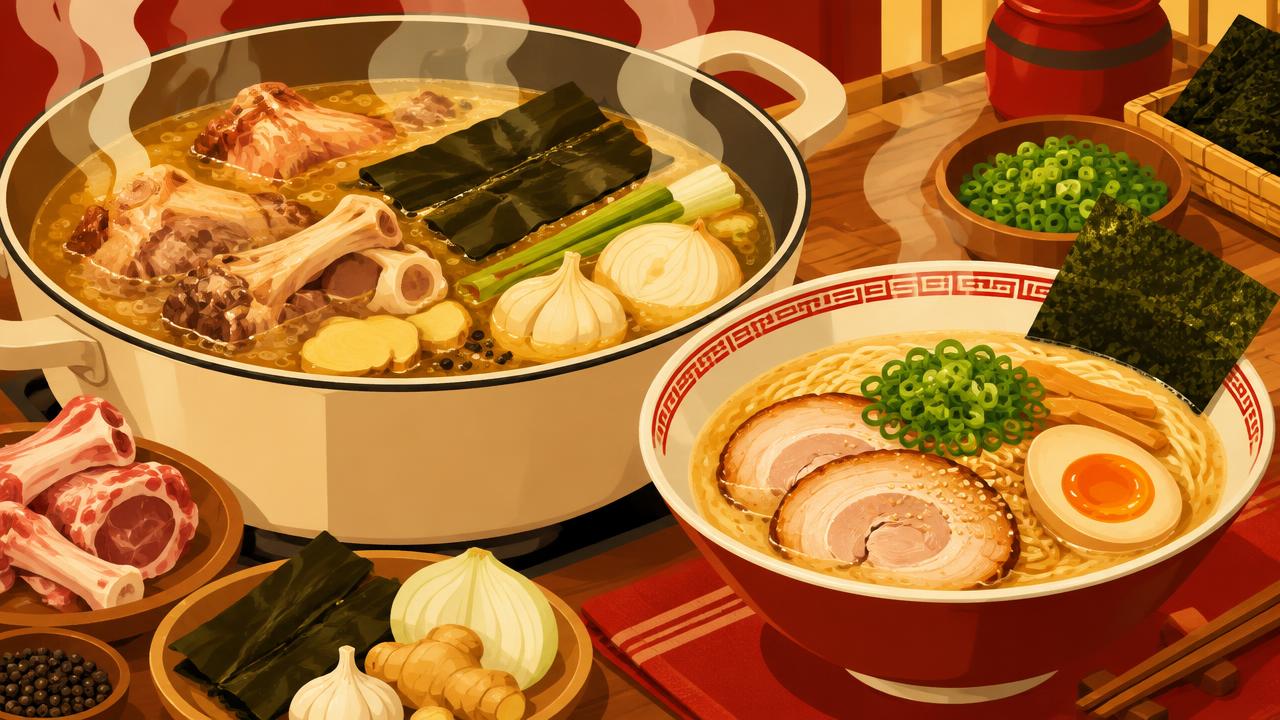
Quick Overview
- Prep time
- 20 minutes
- Cook time
- 6 to 12 hours
- Total time
- About 12 hours
- Servings
- 4 servings
- Difficulty
- Challenging
- Cuisine
- Japanese
Ramen is one of those dishes where the noodles get all the attention but the broth is doing almost all of the work. A bowl of ramen lives or dies on what's underneath the noodles: a stock built for hours from bones and aromatics, seasoned with a concentrated liquid called tare, and finished with a swirl of fat for aroma. None of it is difficult exactly, but it does ask for patience, and understanding the logic behind each step makes the difference between a broth that tastes thin and one that tastes like it came from a serious ramen shop.
This isn't a thirty-minute recipe, and it shouldn't be — real ramen broth takes anywhere from three to twelve hours depending on style, mostly unattended on the stove. What follows breaks down the two building blocks of any ramen bowl (the base stock and the tare), the major broth styles, and the techniques that actually affect texture and flavor.
Chef's Notes / Key Takeaways
- ▸Ramen broth has two parts: the base stock (chintan or paitan) and the seasoning liquid called tare.
- ▸Tonkotsu-style paitan broth needs a hard, rolling boil for hours to emulsify collagen into a creamy body.
- ▸Chintan (clear) broths, like shio and shoyu, are simmered gently to stay clean and clear.
- ▸Blanching and rinsing bones before the long simmer removes impurities that cause bitterness.
- ▸A finishing fat, like chicken schmaltz or garlic oil, adds aroma and richness right before serving.
The Two-Part System: Stock and Tare
Every ramen broth is really two components brought together at the last moment: a base stock, usually made from bones and sometimes vegetables, and tare, a concentrated, highly seasoned liquid spooned into the bottom of the bowl before the stock is ladled in. This separation matters because it lets you cook a relatively neutral stock for hours without oversalting it, then dial in seasoning precisely, bowl by bowl, at serving time.
Chintan vs. Paitan: Clear vs. Cloudy
Broadly, ramen stocks fall into two camps. Chintan broths are clear, made with a gentle simmer that never lets fat and collagen fully emulsify into the liquid — this is the base for most shio (salt) and shoyu (soy sauce) ramen. Paitan broths are cloudy and rich, made by boiling bones hard for hours until collagen and fat break down and emulsify into a thick, creamy liquid — this is the technique behind tonkotsu (pork bone) ramen's signature milky broth.
| Broth Style | Cooking Method | Typical Time | Texture |
|---|---|---|---|
| Shio (salt) | Gentle simmer, chicken or light pork bones | 3-4 hours | Clear, light |
| Shoyu (soy sauce) | Gentle simmer, chicken and/or pork | 3-5 hours | Clear to lightly cloudy, savory |
| Miso | Simmer, often with pork, finished with miso tare | 3-5 hours | Cloudy, hearty |
| Tonkotsu | Hard rolling boil, pork bones/trotters | 6-12 hours | Opaque, creamy, rich |
Why Blanching Bones Comes First
Skipping the initial blanch is the most common reason home ramen broth turns out bitter or muddy-tasting. Raw bones carry blood and impurities that, if simmered straight away, cloud the stock with grey scum and off flavors. A hard five-minute boil followed by a thorough rinse of both the bones and the pot removes this before the real cooking begins, giving you a much cleaner base regardless of which style you're making.
Building the Tare
Tare is what actually defines the "flavor name" of a bowl of ramen — shio, shoyu, and miso are really tare styles as much as broth styles. A shoyu tare is a simple reduction-style blend of soy sauce, mirin, and sake with a touch of sugar; a shio tare relies on salt balanced with sake, mirin, and a bit of the broth itself. Because tare is concentrated, it's added directly to the empty bowl first, then diluted by the hot broth poured over it — this is why restaurant ramen tastes perfectly seasoned in every spoonful rather than salty at the bottom and bland at the top.
Good ramen broth isn't one long process to season correctly all at once — it's a neutral, well-built stock paired with a small, powerful dose of tare, mixed fresh in each bowl.
Getting Tonkotsu's Signature Creaminess
If you're chasing that classic milky-white tonkotsu look, the boil has to stay vigorous, not gentle, for most of the cooking time. A rolling boil physically agitates the fat and collagen released from the bones into tiny droplets that stay suspended in the liquid rather than separating, which is what creates the creamy body. This means checking the pot periodically to top up water, since a hard boil evaporates liquid faster than a simmer.
Finishing Touches That Matter
A spoonful of rendered chicken fat (or a garlic oil, common in shoyu and tonkotsu shops) swirled into the bowl right before serving adds a layer of aroma that plain broth can't achieve on its own, since fat carries flavor compounds that water-based stock doesn't. Classic toppings — a soft-boiled egg marinated in soy sauce and mirin, sliced chashu pork, menma (fermented bamboo shoots), and a sheet of nori — aren't just garnish; they add textural contrast and pockets of concentrated flavor throughout the bowl.
Make-Ahead and Storage
Broth and tare both keep well, which makes this a good project to do in batches. Strained broth freezes for up to three months in portioned containers, and tare keeps in the fridge for a couple of weeks since it's concentrated and salty enough to resist spoiling quickly. Having both on hand means a genuinely good bowl of ramen is just a pot of boiling water and fresh noodles away — the hard work happens well ahead of dinner, exactly the way it does in a ramen shop's kitchen.
Related recipes
- How to Make Onigiri Rice Balls
Shape tender Japanese rice balls with classic fillings and crisp nori using a method that keeps the grains light rather than compressed. The guide explains the essential choices, common mistakes, and useful variations in clear practical terms.
- What Is Japanese Food Culture? A Complete Guide
Japanese food culture is built on principles that go beyond any single dish: seasonality, balance, and respect for ingredients. Understanding these ideas changes how you cook and eat Japanese food at home.
- Japanese Tamagoyaki Rolled Omelet
Make tender layered tamagoyaki with a lightly sweet dashi-seasoned egg mixture and an ordinary nonstick pan. The guide explains the essential choices, common mistakes, and useful variations in clear practical terms.