
Chinese Dongpo Pork: A Legendary Braised Dish
5 min read
Quick Overview
- Prep time
- 25 minutes
- Cook time
- 2 hours 30 minutes
- Total time
- 3 hours
- Servings
- 6
- Difficulty
- Intermediate
- Cuisine
- Chinese (Zhejiang / Hangzhou)
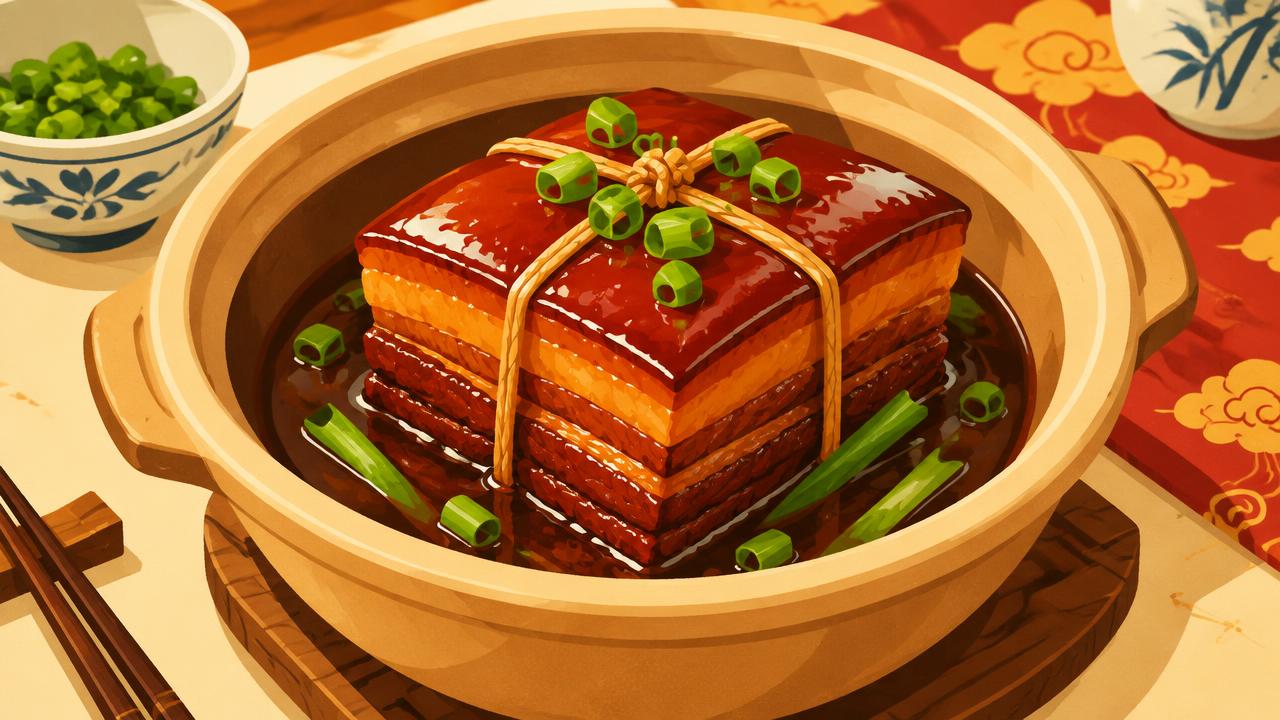
Dongpo pork, or dongpo rou, is one of the most storied dishes in Chinese cuisine, named after the Song Dynasty poet and statesman Su Dongpo, who is said to have developed the recipe while exiled to Hangzhou. It is deceptively simple: pork belly, soy sauce, sugar, wine, and time. But the way those five elements come together, through hours of patient braising, produces something far greater than the sum of its parts — a square of meat so tender it barely needs a knife, glazed in a sauce that is sweet, savory, and deeply aromatic.
This is not a weeknight stir-fry. Dongpo pork rewards patience, and most of the actual work happens in the first twenty minutes, after which the pot mostly takes care of itself. I've made this dish more times than I can count, in cheap aluminum pots and in heavy clay ones, and the lessons below are the ones that consistently make the difference between a good version and a great one.
Chef's Notes / Key Takeaways
- ▸Dongpo pork relies on square-cut pork belly braised low and slow until the fat turns translucent and jelly-soft.
- ▸A blanch-then-braise method removes scum and off-flavors before the meat ever touches the sauce.
- ▸The classic sauce balances dark and light soy sauce, rock sugar, and Shaoxing wine in roughly equal-strength layers.
- ▸Tying each portion with kitchen string keeps the fat cap intact through hours of gentle simmering.
- ▸Resting the braised pork overnight in its sauce dramatically improves texture and flavor penetration.
Choosing and Cutting the Pork
You want pork belly with a good ratio of fat to lean meat, ideally with the skin still attached. Look for a piece that is at least 1.5 inches thick so you can cut clean 2-inch squares with distinct layers of skin, fat, and meat visible on the cut face. Thin, skinny belly cuts will just fall apart and dry out rather than turning silky.
Cut the belly into squares before cooking rather than after. This lets the surfaces caramelize evenly and makes portioning effortless once the meat is fall-apart tender.
Why Blanching Matters
Skipping the blanching step is the single most common mistake home cooks make with this dish. A three-minute blanch in boiling water pulls out coagulated blood and surface impurities that would otherwise cloud your sauce and leave a faint gamey off-note. Rinse the pork in cold water afterward and pat it completely dry before it goes anywhere near hot oil, since a wet surface will spatter aggressively.
Building the Caramel and Braising Liquid
Traditional Dongpo pork starts with a dry caramel: rock sugar melted in oil until it turns a light amber, almost like the base of Chinese red-braised dishes (hong shao). This caramel gives the final dish its glossy mahogany color and a subtle bitter-sweet backbone that plain soy sauce alone can't replicate. Work quickly here — rock sugar can go from amber to burnt in under a minute, and burnt sugar will make the whole braise taste acrid.
Once the pork is seared in the caramel, Shaoxing wine goes in for its aromatic backbone. This isn't a change-up ingredient; using cooking sherry or omitting it entirely will leave the dish flat and one-dimensional. If you truly cannot find Shaoxing wine, a dry sherry is the closest substitute, though the flavor won't be identical.
| Component | Role in the Dish | Approximate Ratio |
|---|---|---|
| Rock sugar | Caramelization, gloss, subtle sweetness | 3 tbsp total |
| Light soy sauce | Primary savory saltiness | 1/4 cup |
| Dark soy sauce | Color and mild molasses depth | 3 tbsp |
| Shaoxing wine | Aromatic lift, cuts richness | 1 cup |
| Ginger and scallion | Aromatics, masks any pork off-notes | 6 slices / 4 stalks |
The Long, Slow Braise
Once everything is in the pot, the braise itself should barely simmer — think of small, lazy bubbles breaking the surface every second or two, not a boil. A hard boil will toughen the lean parts of the meat even as the fat renders, giving you an uneven texture. Keep the pot mostly covered, with the lid cracked slightly if your stove runs hot, and check every 30 minutes to make sure the liquid hasn't reduced too far; top up with a splash of hot water if needed.
Two to two and a half hours is the typical range for 2-inch squares. You'll know it's ready when a chopstick slides through the pork with almost no resistance and the fat layer looks glassy and translucent rather than opaque and waxy.
The secret of Dongpo pork isn't a rare ingredient — it's restraint. Low heat, minimal stirring, and enough time for the fat to become something closer to silk than to fat.
Finishing With a Steam
Many Hangzhou restaurants finish Dongpo pork with a final steam, skin-side up, in individual bowls or small clay pots after reducing the braising liquid separately. This step firms the shape back up after the long simmer and lets the reduced glaze cling properly rather than pooling thin around the meat. If you don't have small steaming vessels, simply simmering the pork gently in the reduced sauce for the last 15 minutes achieves a similar result.
Serving and Storage
Dongpo pork is traditionally served over plain steamed rice, which soaks up the rich sauce, alongside a simple steamed or blanched green vegetable like baby bok choy to cut the richness. A small portion goes a long way; this is meant to be an indulgent centerpiece, not a large everyday plate of meat.
The dish actually improves with a rest. Cool it, refrigerate overnight, then gently reheat the next day — the flavors deepen and the texture sets slightly, making it easier to portion neatly. It keeps well for up to four days refrigerated and freezes nicely for up to two months; thaw overnight in the fridge before reheating slowly on the stove.
Common Mistakes to Avoid
- Boiling too hard, which toughens the meat instead of gently melting the connective tissue.
- Skipping the blanch, leaving a muddy, slightly gamey undertone in the final sauce.
- Using only dark soy sauce, which makes the dish taste flat and overly bitter without the brighter salinity of light soy.
- Cutting the pork too thin, so it disintegrates rather than holding its shape.
- Rushing the reduction at the end, leaving a thin, watery sauce instead of a glossy glaze.
Dongpo pork is a dish that teaches patience and rewards it generously. Once you've made it a couple of times, the rhythm becomes intuitive: sear, deglaze, simmer, reduce, rest. What you're left with is a piece of history on your plate, and a very good excuse to make extra rice.
Related recipes
- How to Make Chinese Scallion Pancakes
Make crisp, flaky Chinese scallion pancakes with a simple hot-water dough, aromatic scallion oil, and reliable stovetop technique. The guide explains the essential choices, common mistakes, and useful variations in clear practical terms.
- How to Make Mapo Tofu at Home
Mapo tofu is a fast, fiery Sichuan classic that lives or dies on a well-built sauce and gentle handling of soft tofu. This guide covers the technique, ingredient substitutions, and the small details that separate home versions from restaurant ones.
- How to Make Char Siu Pork
Learn how to make Cantonese char siu with a glossy savory-sweet glaze, tender pork, and deep caramelized edges in a home oven. The guide explains the essential choices, common mistakes, and useful variations in clear practical terms.