
How to Make Mapo Tofu at Home
4 min read
Quick Overview
- Prep time
- 15 minutes
- Cook time
- 20 minutes
- Total time
- 35 minutes
- Servings
- 4
- Difficulty
- Easy to intermediate
- Cuisine
- Chinese (Sichuan)
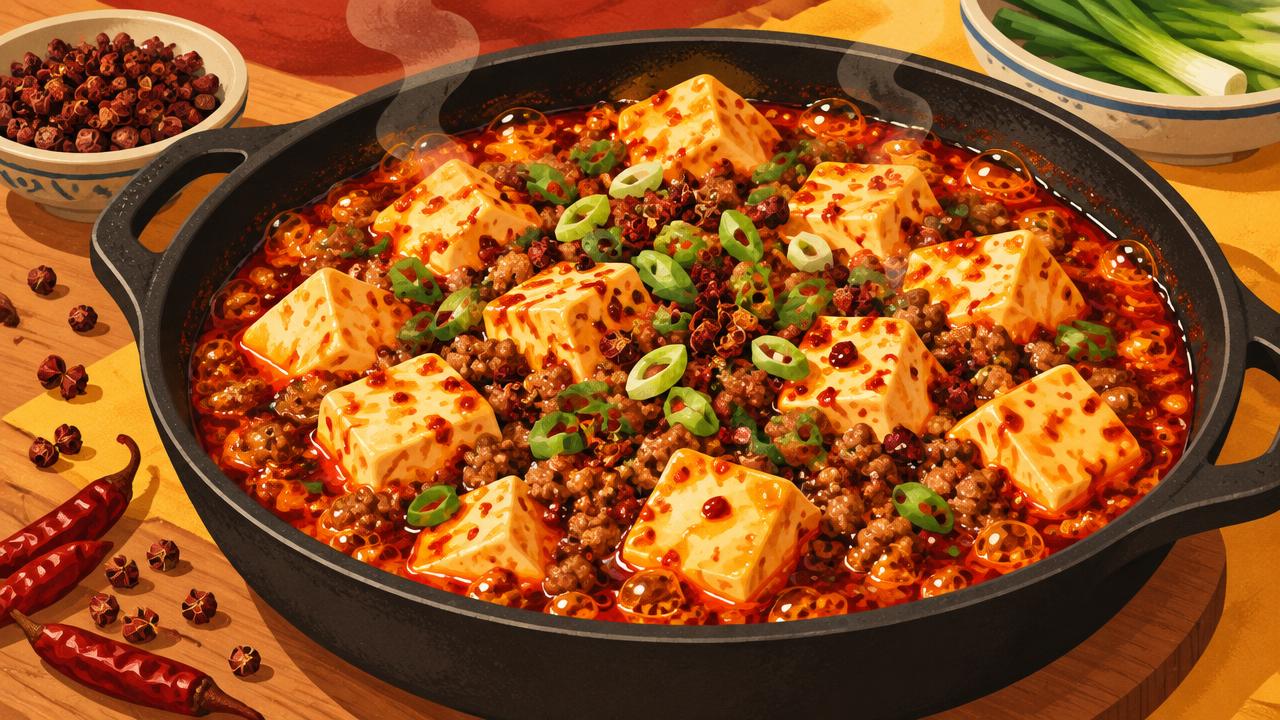
Mapo tofu is proof that a handful of humble ingredients, handled with care, can produce something far more complex than its parts suggest. At its best, it's silky cubes of tofu suspended in a glossy, fiery-red sauce, threaded with savory ground meat, and finished with the tingling buzz of Sichuan peppercorn. At its worst, and I've made this version too, it's a pot of broken tofu chunks swimming in a thin, bland liquid. The difference between the two comes down to a handful of specific techniques, not a longer ingredient list.
This is a genuinely fast dish once you have the ingredients assembled, usually done start to finish in well under 40 minutes, which makes it an excellent weeknight centerpiece as long as you respect a few non-negotiable steps along the way.
Chef's Notes / Key Takeaways
- ▸Soft or silken tofu, simmered gently and not stirred aggressively, is the correct texture for authentic mapo tofu, not firm tofu.
- ▸Doubanjiang and fermented black beans together build the dish's signature savory, fermented depth.
- ▸A cornstarch slurry added in stages, rather than all at once, gives better control over the final sauce thickness.
- ▸Freshly ground, toasted Sichuan peppercorn added at the end preserves the numbing 'ma' sensation that dulls quickly with prolonged cooking.
- ▸Blanching the tofu briefly in salted water before adding it to the sauce firms it just enough to survive simmering without turning watery.
Choosing the Right Tofu
This is the most common point of failure. Firm or extra-firm tofu, while easier to handle, gives you a dense, almost meaty texture that isn't authentic mapo tofu at all. You want soft tofu, sometimes labeled "silken firm" depending on the brand, which holds its shape just enough to survive gentle simmering but still has a delicate, custardy give when you bite into it.
Blanching the cubed tofu briefly in lightly salted simmering water before it goes anywhere near the sauce firms the exterior just enough to prevent it from disintegrating later, without changing its interior texture. Skip this step and you're much more likely to end up with tofu that crumbles apart the moment you stir the pan.
Handling Tofu Gently
Once the tofu is in the sauce, put down the spatula and pick up a ladle or the back of a large spoon instead. Nudge and shake the pan to move the tofu around rather than stirring through it. Aggressive stirring is the single fastest way to turn beautiful cubes into scrambled tofu mush.
Building the Sauce
Mapo tofu's savory backbone comes from two fermented ingredients working together: doubanjiang, a fermented broad bean and chili paste, and douchi, fermented black soybeans. Doubanjiang supplies chili heat and a deep, salty, almost umami-forward funk, while the black beans add a distinct, slightly sweet fermented note that doubanjiang alone doesn't fully replicate. If you can only find one, doubanjiang is the more essential of the two, but using both gets you noticeably closer to the dish most people recognize from Sichuan restaurants.
| Ingredient | Flavor Contribution | If Unavailable |
|---|---|---|
| Doubanjiang | Salty, spicy, fermented depth | Chili garlic sauce plus a little miso |
| Fermented black beans | Savory, slightly sweet funk | Omit, or add a touch more soy sauce |
| Sichuan peppercorn | Numbing "ma" tingle | No true substitute; omit if unavailable |
| Ground pork | Savory richness, textural contrast | Ground beef, chicken, or mushroom for a vegetarian version |
Thickening in Stages
Rather than dumping a whole batch of cornstarch slurry into the pan at once, add it in two smaller additions. Pour in about half, give the pan a gentle shake, and let it come back to a simmer for 30 seconds before deciding whether the sauce needs more. Sauces thicken more than they initially appear to while resting, and adding all the slurry upfront often results in a gluey, overly stiff final texture rather than the glossy, just-coating consistency you're after.
The Peppercorn, Added Last
Freshly toasted and ground Sichuan peppercorn loses much of its distinctive numbing quality if it simmers in the sauce for too long. Toast whole peppercorns in a dry pan for about a minute until fragrant, grind them coarsely with a mortar and pestle or spice grinder, and sprinkle them over the finished dish right at the end, off the heat. This single step makes a bigger difference to the finished flavor than almost any other adjustment you can make.
Mapo tofu isn't measured in how much chili you can handle — it's the layering of fermented funk, meaty richness, and that particular numbing tingle that makes each bite feel slightly different from the last.
Adjusting for Dietary Needs
For a vegetarian version, swap the ground pork for finely chopped shiitake mushrooms or a plant-based ground meat substitute, and use vegetable stock in place of chicken stock; the doubanjiang and black beans provide plenty of savory depth on their own. For a lower-sodium version, cut back slightly on the soy sauce and rinse the fermented black beans more thoroughly before use, since both the beans and doubanjiang are naturally quite salty.
Common Mistakes to Avoid
- Using firm or extra-firm tofu, which changes the dish's entire character.
- Skipping the tofu blanch, leading to crumbly cubes once simmered.
- Stirring the pan too vigorously once the tofu is added.
- Adding all the cornstarch slurry at once, resulting in an overly thick, gluey sauce.
- Cooking the ground Sichuan peppercorn in the sauce for too long, dulling its numbing effect.
Serving
Mapo tofu should be served immediately over freshly steamed white rice, which is essential for soaking up the abundant sauce and tempering the heat. It doesn't need much alongside it beyond rice and maybe a plain stir-fried green vegetable, since the dish itself is rich, spicy, and quite filling on its own. Leftovers reheat reasonably well over low heat, though the tofu will continue to soften slightly, so it's best enjoyed within a day or two.
Related recipes
- How to Make Chinese Scallion Pancakes
Make crisp, flaky Chinese scallion pancakes with a simple hot-water dough, aromatic scallion oil, and reliable stovetop technique. The guide explains the essential choices, common mistakes, and useful variations in clear practical terms.
- How to Make Char Siu Pork
Learn how to make Cantonese char siu with a glossy savory-sweet glaze, tender pork, and deep caramelized edges in a home oven. The guide explains the essential choices, common mistakes, and useful variations in clear practical terms.
- Dan Dan Noodles at Home
Build a balanced bowl of dan dan noodles with sesame paste, chile oil, preserved vegetables, and savory minced pork. The guide explains the essential choices, common mistakes, and useful variations in clear practical terms.